Request a Demo

The development of pilot projects

Pilot Project Development Activities

Previous articles in this series have analysed some key aspects of European-level legislation with respect to the management and use of data (personal and non-personal, linked to the contexts of connected and smart mobility) and of European legislation with respects to digital platforms. The analysis highlighted several elements that must be considered in order to develop a new mobility paradigm based on connected vehicles in which data and their exchange are a key element for innovation.

This article is dedicated to the description of the activities carried out to identify smart mobility technologies and solutions capable of fostering field projects that can provide answers to 14 use cases and that can be associated with as many pilot projects identified during the 2021 Initiative as possible.

Indeed, the 2022 project activity of OCTO and The European House – Ambrosetti is based on specific objectives, notably:

  • Gathering the attention and interest of multiple stakeholders around connected mobility issues and opportunities;
  • Involve as many stakeholders as possible in the design and implementation of various pilot projects that practically demonstrate the application potential of connected mobility and the benefits that can be achieved.

The project path was defined with the aim of launching and substantiating the vision and mission of the Italian Way to Connected Mobility, identified by OCTO and The European House – Ambrosetti and communicated during the OCTO Connected Forum 2021.
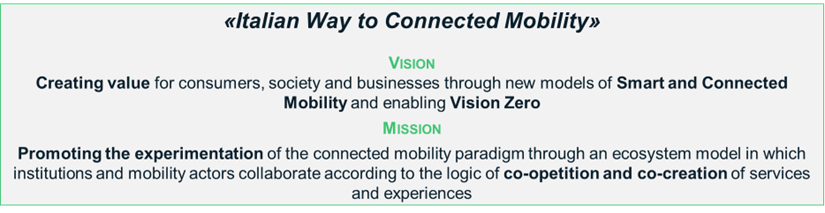
Figure 1 Mission and vision of the Italian Way to Connected Mobility. Source: elaboration The European House – Ambrosetti, 2022

To this end, seven Working Tables – Urban Planning, Road Safety, MaaS Models, Behavioral-based Pricing, Fleet Efficiency Monitoring, Transition to Green, Mobility Data Space – were held with the aim of providing a situational picture of Italian mobility and to engage different stakeholders. The Working Tables were an opportunity to present and discuss the 14 identified use cases and to identify possible implementation paths together with the stakeholders involved.
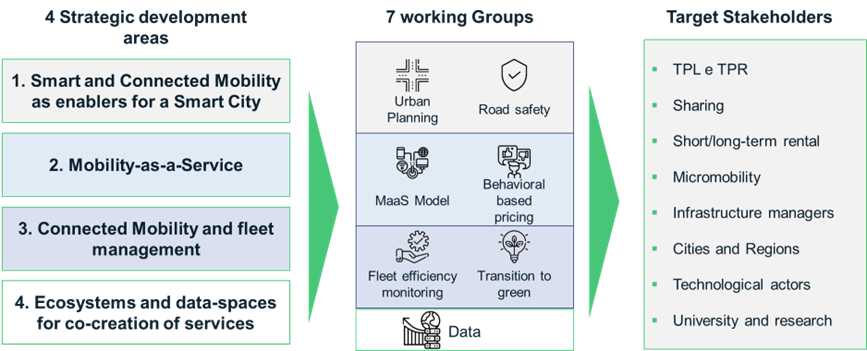
Figure 2 The four strategic areas, pilot projects and Working Tables. Source: elaboration The European House – Ambrosetti, 2022

Following the Working Tables, various stakeholders were engaged in additional meetings, given their interest in exploring the opportunity to develop innovative pilot projects together with OCTO and The European House – Ambrosetti.

The engagement activities enabled OCTO and The European House – Ambrosetti to get in touch with 40 mobility stakeholders.

Figure 3 Stakeholders involved in the Working Tables

Pilot projects are in fact a concrete opportunity forstakeholders to test technologies and new operational approaches,while at the same time to obtain and develop skills and know-how.

The 14 pilot projects and the related use cases proposed by OCTO and The European House – Ambrosetti were shared by the stakeholders involved in the Working Tables and subsequently engaged as “examples of what can be done” and from which to address concrete development needs. In this sense, the opportunity to compare and discuss the points of view of various stakeholders, OCTO and The European House – Ambrosetti made it possible to identify new areas of collaboration, tailor-made with respect to the needs of the various stakeholders involved, but with solutions in line with the proposals defined in the pilot projects model.

Engagement with Public Administrations

The public stakeholder engagement approach was devoted to  create awareness among public decision-makers about the technical structures of the opportunities for the development of a new connected and smart mobility ecosystem and the related benefits for public administration, urban mobility stakeholders and citizens.

In fact, bringing awareness to public administrations about the development of pilot projects proves to have a significant effect in creating links between the public world and enterprises. Private actors can become aware of the real needs of different public administrations, while the technical and political structures of the latter benefit from innovative technologies and approaches provided by private actors.

Including these two components in the framework of operational meetings made it possible to set off the process of designing new solutions that, through the use-cases of the 14 pilots, would address the priority needs of various public administrations.

Notably, the main needs of the municipalities emerged during the various meetings, are:

  1. Mobility infrastructure planning – the development of a connected mobility system requires a change of infrastructure;
  2. Management of city centre areas – Limited Traffic Zones (LTZs) can benefit from data connectivity to efficiently manage and monitor access;
  3. Establishment and management of Low Emission Zones – data is required to identify the best Low Emission Zones (LEZ) for each specific area, based on the different data mobility collected;
  4. Identification of frequent accident areas – data can support the detection of frequent accident areas, allowing action to be taken accordingly;
  5. Prioritisation of investments – data collection on the state of roads for prioritisation and improvement of maintenance work;
  6. Creation of rewarding mechanisms for virtuous citizens – by monitoring citizens’ driving styles (e.g. limited speed, correct parking behaviour, limited use of private vehicles, etc.), correct behaviour can be incentivised and encouraged.

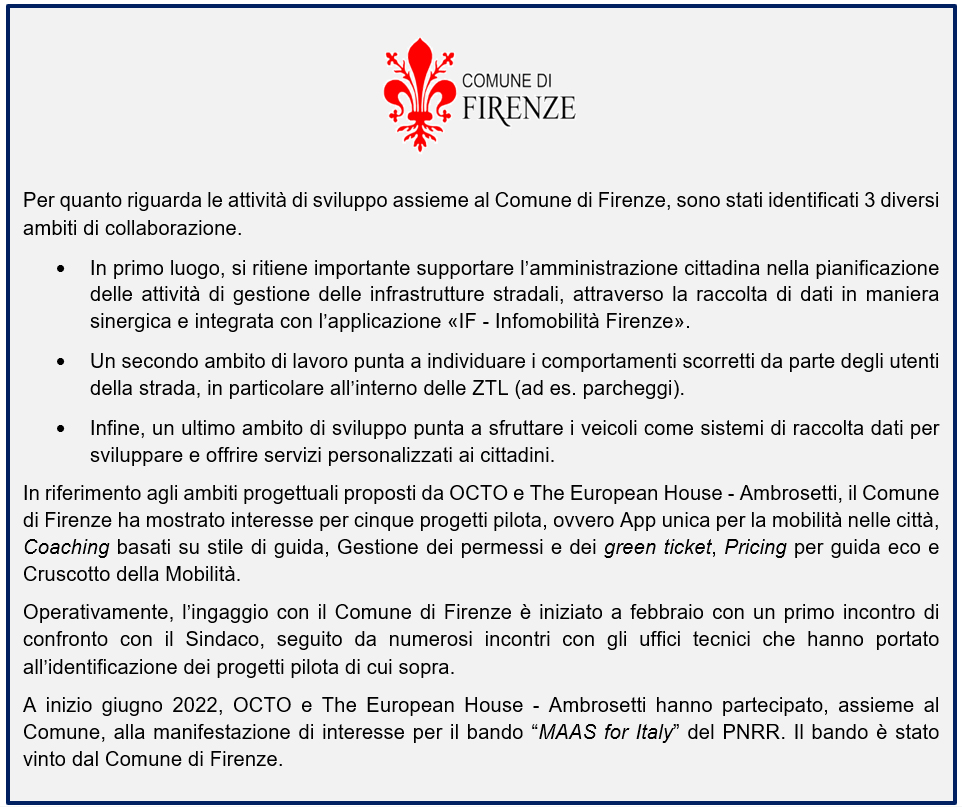
Once the vision had been defined and the projects of interest were identified, the dialogue with the municipalities focused on defining the administrative setting to manage relations and the assets exchange  (technology, data, know-how, etc.) between the various actors involved. From a formal point of view, the “procurement code” does not define how to carry out the development of innovative projects whereby resources are shared reciprocally and, through collaboration, are implemented. This aspect may represent a major limitation with respect to the possibility of making cities a virtuous context for the development of innovative projects.
Engagement with private actors

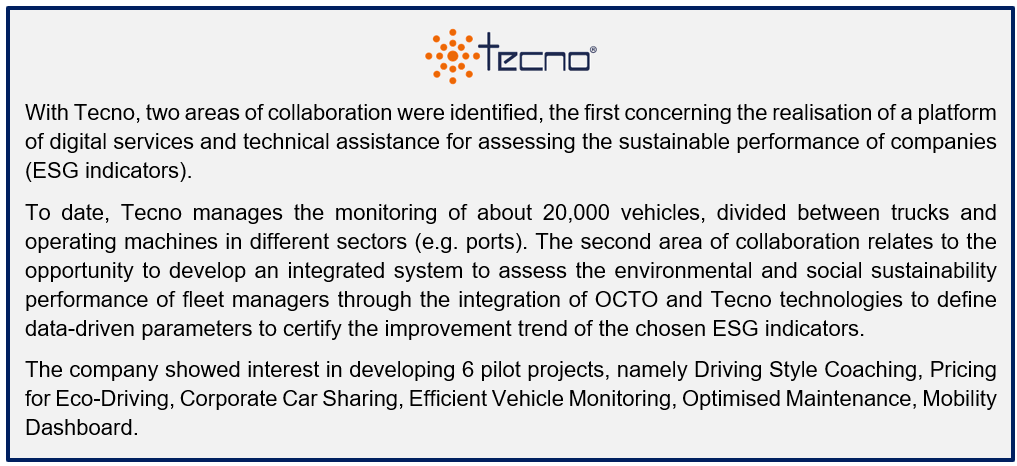
Regarding the involvement of private stakeholders, i.e., companies, the main focus was on the co-creation of new services that would involve pooling technologies and databases from different actors, and that could give rise to new smart mobility products.

In fact, a first major area of development was the definition of new approaches to measure the sustainability performance of fleets, integrating different KPIs along the various dimensions of environmental, social and governance sustainability. This issue appears to be particularly relevant in light of the growing focus on sustainability, also from a regulatory and financial point of view.

The definition of these solutions depends on the ability to integrate different technologies capable of assessing the environmental performance of vehicles and fleets and capable of improving social performance. Social performance includes:

  • Driver safety;
  • The safety of people on board;
  • The safety of people outside the vehicles;
  • The quality of the public transport service.

The possibility of co-creation in this area lies in the ability to integrate different databases, to build APIs capable of acquiring homogeneous data from different types of media, and the possibility of installing on-board technologies
The results of the development activities of the different use-cases will be disseminated to increase the knowledge of the benefits linked to the adoption of technologies supporting the development of connected mobility systems.

In addition, the pilot projects will provide insights as to how co-operation between different actors is a key element in creating value within the new Data Economy ecosystems, also in mobility projects. 

In fact, the pilot projects demonstrate how the pooling of technologies and databases from different sources and actors can enable innovative solutions for different mobility challenges, so that it can come closer to OCTO’s Vision Zero paradigm.

The 2022 edition of OCTO Connected Forum will be an opportunity to verify the progress of the development of pilot projects, and analyse the first (partial) results achieved and the challenges that still need to be addressed to remove process and regulatory obstacles, that can promote faster testing times especially in the most peripheral areas  – that can therefore benefit from the qualified involvement and support for the launch of digital Smart Mobility processes.

The next article in this series will be dedicated to the launch of the OCTO Connected Forum by OCTO and The European House – Ambrosetti.

Author:

The European House – Ambrosetti
Covid and Mobility

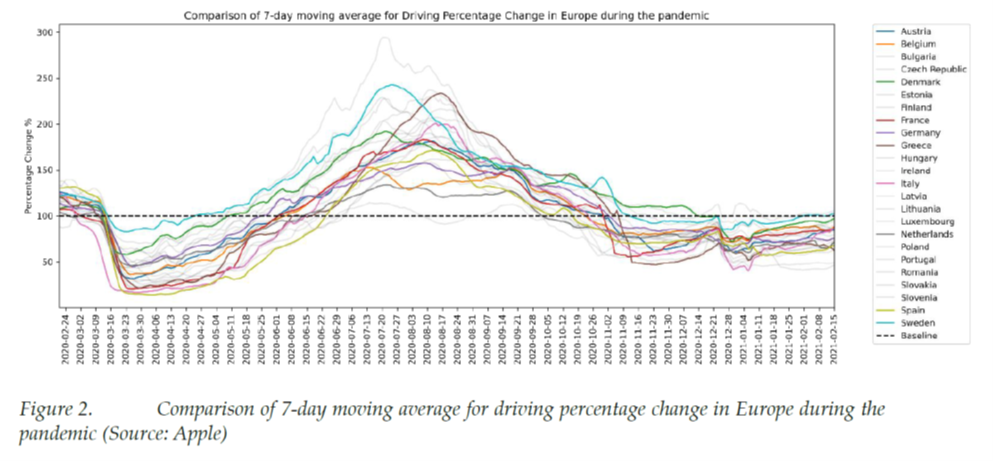
Researchers Marianthi Kallidoni, Christos Katrakazas and George Yannis from Department of Transportation Planning and Engineering, National Technical University of Athens, Greece, published an article in The European Journal of Transport and Infrastructure Research (EJTIR), on 31 of May 2022, regarding the relationship between covid-19 restrictive  measures and mobility patterns. The article provides an a-up to-date review on this issue. Here are some of the key issues.

As countermeasures to the high transmissibility of COVID-19, “social distancing” and “lockdown” measures were imposed globally in order to diminish the infections and thus the emergency hospitalizations. The restrictive measures mainly concerned the closure of schools and workplaces,  limits on gatherings, orders to “stay at home” and restrictions on internal movements and on  international travel.

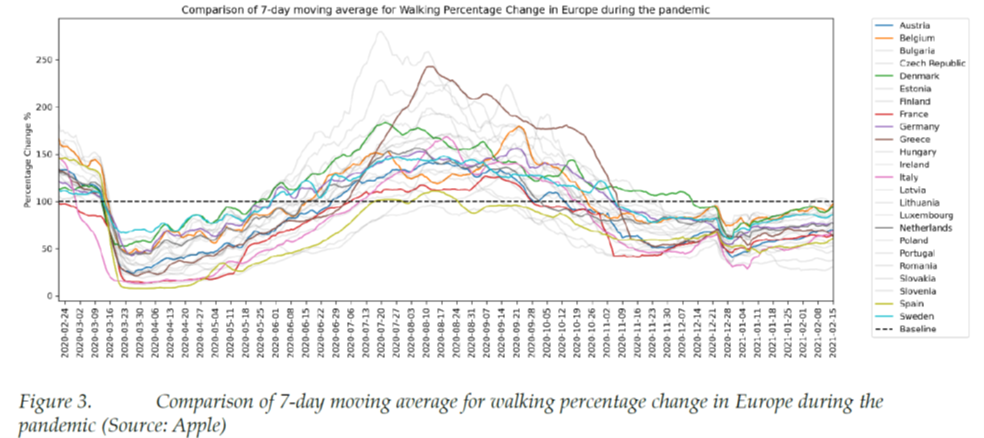
The aforementioned countermeasures, as well as the fear of exposure to the virus, had a direct impact on travel behavior. Public transport users and overall mobility have been radically reduced.  For instance, in the European Union driving was reduced up to 89%, while the use of public  transportation fell up to 93% in the first months of the pandemic. At the same time, in many European cities an increased interest in cycling, shared bicycles and walking was observed. As a result, the mobility trends have  changed leading to new unknown patterns.

Factors that determined  mode choice in pre-coronavirus era, such as travel time saving, comfort and cost, became less priority during the pandemic. During the first “wave” of COVID-19 in  China, commuters’ choice of mode of transport was dictated by the possibility of getting infected. Many surveys indicated an important shift from usage of public modes of  transport to private ones.

With respect to walking volumes, a similar reduction was identified, although to a lesser degree than the massive reduction of transit trips. Reports noticed an important shift from motorized modes to walking and cycling. Walking was preferred for short distances as a safer and  healthier mode of transport. A survey conducted  in Germany revealed an important shift from regular transport use to walking, cycling and  gradually driving, resulting in an increased proportion of walking trips compared to the pre-pandemic era.

Methodology

Time-series analysis has been repeatedly used in a wide range of transportation studies, in order to predict future conditions from observed past data. Especially during COVID-19 crisis, many researchers have implemented seasonal time-series models to analyze the daily effect of the pandemic on travel behavior and road safety.

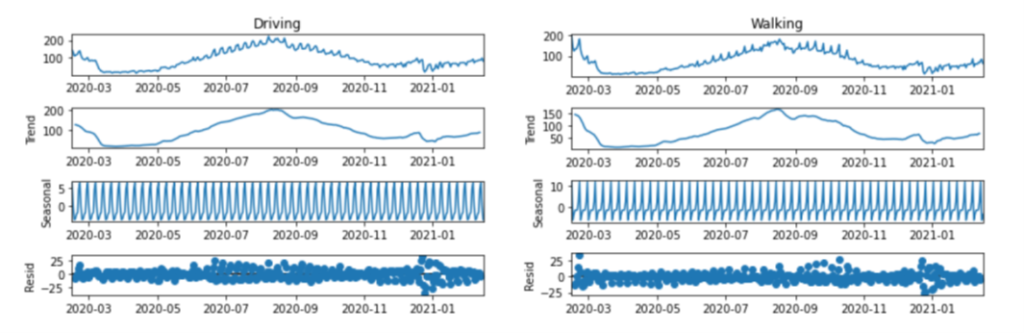
Regarding the present analysis, the available time-series were split into several components (i.e. trend-cycle, seasonal and residual) to detect the underlying patterns. For this research, data were extracted from the mobility trend report of Apple (Apple, 2021), in which route requests are measured and divided into driving, walking and public transport use. 

Discussion

Orders to “stay at home”, also known as lockdown measures, were probably the most restrictive policy and were widely implemented in the European Union. Orders to “stay at home” are limited additionally to public events, crowded gatherings, public transport use, commuting to or from workplaces and internal movements. Reports showed a major drop in road fatalities in young people aged 0- 17 years occurred due to school closing.

Restrictions on international travel were imposed in all  countries, especially those that did not implement other measures, to prevent the transmission of  the virus from other countries.

Authors stress that results demonstrate the direct impact of the applied restrictive measures on travel behavior in the  majority of European countries, underlining the alteration of mobility patterns due to the  pandemic. The sharp decline of traffic in the spring of 2020 is linked to the national restrictive strategies, while the easing of the imposed measures contributed to the gradual increase of drivers  and pedestrians flows in the summer of 2020.

The researchers point out that from a policy perspective, these findings are extremely worthy for the subsequent waves of COVID-19 cases or future crises. Through the estimated models, the current research suggests the most adequate strategies in pan-European and national level for controlling the disease spread. For example, governments along with traffic management centers can evaluate the different mobility evolutions and identify popular areas, where specific measures could be taken to restrict  the spread of the virus.

Trends in mobility and the corresponding correlation with COVID-19  countermeasures could also act as a surrogate for virus transmission especially in times when cases are increasing. Consequently, if mobility patterns are increasing, governments and local authorities  could impose the most significant measures as these are shown by the developed models to stop  the spread.

The study highlights that the understanding of the different mobility evolutions with similar countermeasures would help decision makers to enforce or lift the confinement measures after the required period. Towards that end, local and regional  observatories which observe mobility and disease trends could be initiated in order to proactively  detect the effect of COVID-19 and other diseases and the relationship with mobility and the corresponding disease-restricting countermeasures.

Since different mobility results imply also different severity of the countermeasures between countries, international guidelines could be set  in order to declare the most effective countermeasures based on mobility patterns between  countries, especially on those with close business and touristic relationships. Furthermore, the  transferability of this study allows governments and policy makers to devise their pandemic response depending on the results of countries with similar demographic and geographic characteristics. Hence, the analysis could provide useful insights also for countries that were not studied in the current paper but present similar cultural, demographic and geographic attributes.

Finally, a smartphone application could be developed based on the previous insights to provide citizens appropriate advice for the crowding avoidance, by examining the response of countries  with similar countermeasures.

Nevertheless, the authors agree that this paper is not without shortcomings. Utilized data from the mobility trend report of Apple refer to a specific sample of drivers and pedestrians (i.e., users of Apple), which  are only a sub-group of the national populations and may not resemble the total travel behavior.  Apple does not hold demographic information of users and the representativeness of the sample  compared to the general population is not available. Moreover, these data cover a short time span  (i.e., February 2020 – February 2021) with only one day baseline (i.e. the 13th of January 2020) which  dismisses the data seasonality within a year. An analysis of the traffic volumes during the  pandemic compared to the previous years should be conducted to examine the magnitude of the  impact due to the pandemic. Furthermore, the association of mobility with the confinement measures is important, but still indirect. Using the number of confirmed cases and deaths, the time series models could have a better fit and provide better forecasts for the evolution of driving and walking during the pandemic.

The researchers emphasize that further research should consider the combination of restrictive measures, the strictness scale and  the evolution of confirmed cases and deaths, as mentioned above, using multivariate forecasting  models e.g., Vector AutoRegression (VAR) in order to gain further insights on the impact of  COVID-19 on travel behavior. Moreover, expanding the time frame of the study and analyzing  mobility of the next pandemic “waves” may provide better and more precise outcomes.

Automotive future is electric

Researchers Andreas Cornet, Ruth Heuss,Andreas, Tschisner, Russell Hensley,  Patrick Hertzke, Timo Möller, Patrick Schaufuss, Julian Conzade, Stephanie Schenk and Karsten von Laufenberg from the McKinsey Center for Future Mobility, published an article named: “Why the automotive  future is electric”. The article provides an up- to date review on this issue. Here are some of the key issues.

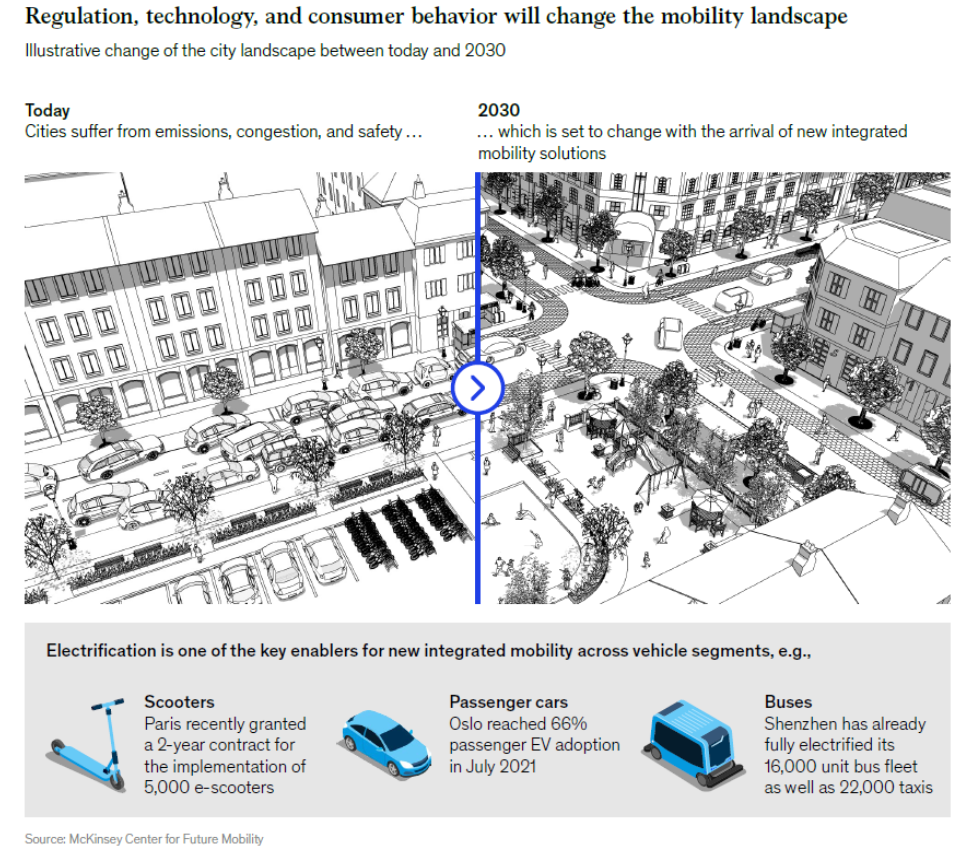
The tipping point in passenger EV adoption occurred in the second half of 2020, when EV sales and penetration accelerated in major markets despite the economic crisis caused by  the COVID-19 pandemic. In 2021, the discussions have centered on the end date for internal combustion engine (ICE) vehicle  sales. New regulatory targets in the European Union and the United States now aim for an EV share of at least 50 percent by 2030, and several countries have announced accelerated timelines for ICE sales bans in 2030 or 2035. Industry players are accelerating  the speed of automotive technology innovation  as they develop new concepts of electric,  connected, autonomous, and shared mobility. The  industry has attracted more than $400 billion in  investments over the last decade – with about  $100 billion of that coming since the beginning of 2020. All this money stresses the authors, targets companies and startups working on electrifying mobility, connecting vehicles, and autonomous driving technology. Such technology innovations will help reduce EV costs and make electric shared  mobility a real alternative to owning a car. 

Regulation and technology

Regulatory pressure and the consumer pull toward EVs vary greatly by region. Europe is mainly a regulation-driven market with high subsidies, while in China consumer pull is very strong despite reduced incentives. In the United States, EV sales have grown slowly due to both limited regulatory pressure and consumer interest, although the regulator trend is set to change under the new administration. 

On a global level, the researchers expect EV (BEV, PHEV,  and FCEV)1 adoption to reach 45 percent under currently expected regulatory targets. However,  even this transformative EV growth outlook is  far below what’s required to achieve net zero  emissions. EVs would need to account for 75  percent of passenger car sales globally by 2030,  which significantly outpaces the current course  and speed of the industry.

The authors believe Europe– as a regulatory-driven  market with positive consumer demand trends – will electrify the fastest and is expected to remain the global leader in electrification in terms of EV market share. In addition to the European  Commission target, which requires around 60  percent EV sales by 2030, several countries have already announced an end to ICE sales by  2030. In line with this, seven OEM brands have  committed to 100 percent EV sales by 2030  within the European Union. In the most likely accelerated scenario, consumer adoption will  exceed regulatory targets and Europe will reach around 75 percent EV market share by 2030. The European Union announced a zero-emissions target for new cars by 2035.

China will also continue to see strong growth in electrification and remain the largest EV market in absolute terms. The study estimates that a Chinese EV share above 70 percent for new car sales in 2030. 

In the United States, the Biden administration  announced a 50 percent electrification target  for 2030, strong investments in charging  infrastructure, and more stringent fleet emissions  targets.

In the European Union, achieving the accelerated scenario of around 75 percent EV sales by 2030 will have implications for the entire EV value chain and ecosystem. Incumbent automotive suppliers need to shift production from ICE to EV components. Europe will have to build an estimated 24 new battery giga-factories to supply local passenger EV  battery demand. With more than 70 million EVs on  the road by 2030, the industry will need to install  large numbers of public chargers and provide  maintenance operations for them. Renewable electricity production needs to increase by 5  percent to meet EV charging demand.

Electrification will cause a major shift  in the entire automotive supply chain

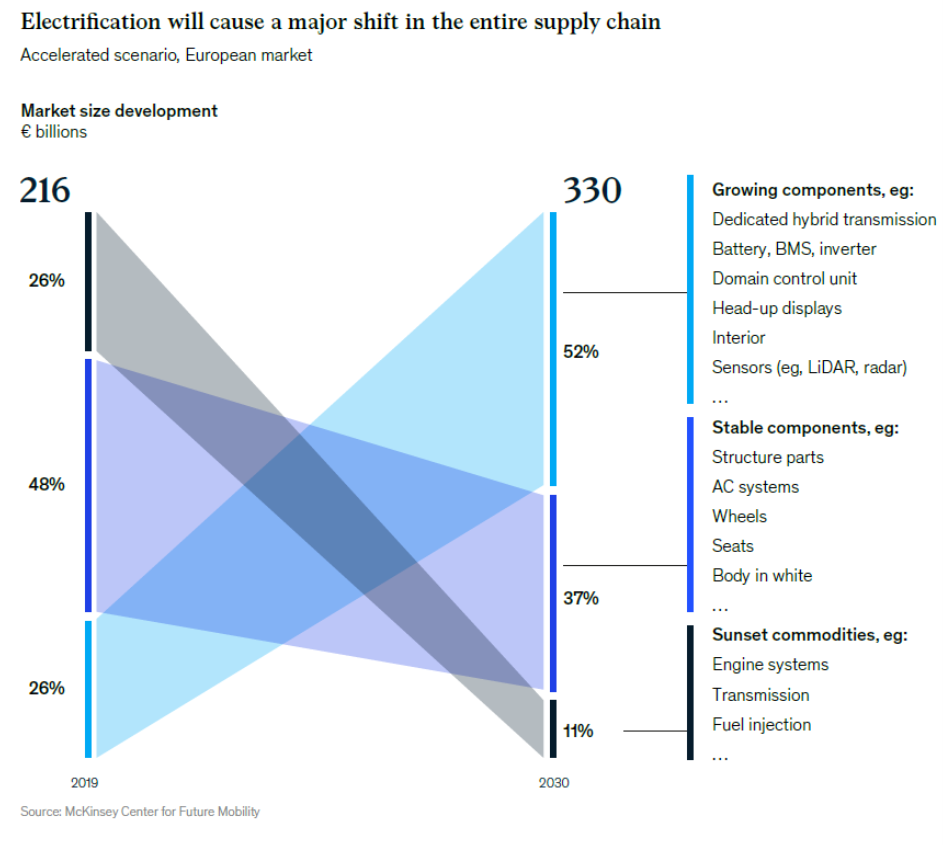
According to the study, the transformation of the automotive industry toward electrification will disrupt the entire supply chain and create a significant shift in market size for automotive components. Critical components for electrification such as batteries and electric drives and for autonomous driving like light detection and ranging (LiDAR) sensors and radar sensors will likely make up about 52 percent of the total market size by 2030.

Based on announced buildup plans, the researchers expect a 20-fold increase in battery production capacity in Europe to 965 GWh by 2030. Assuming the full capacity is built by 2030.

Battery cell production is moving physically closer  to vehicle assembly plants. While ten years ago  almost all cells were imported from Asia, regional production hubs exist today in Eastern Europe, for example. Furthermore, multiple plants will go  onstream in key vehicle-producing countries like  Germany, the United Kingdom, and France and  in low-carbon-emitting environments such as  Norway and Sweden. 

In line with EV uptake, the buildup of charging infrastructure needs to accelerate to avoid becoming a potential bottleneck and limiting  consumer-driven EV adoption. Building charging infrastructure in sync with the EV fleet will be essential in the coming decade. While first-generation EV buyers relied mainly on  private charging (in 2020, 80 percent of EV buyers  in Europe had access to private charging), the next generation will depend on public charging. 

Likewise, regulatory processes to install chargers in private homes require simplification and production capacity for wall boxes must increase.  Researchers estimate the industry needs to install more than 15,000 chargers per week by 2030 within the  European Union.

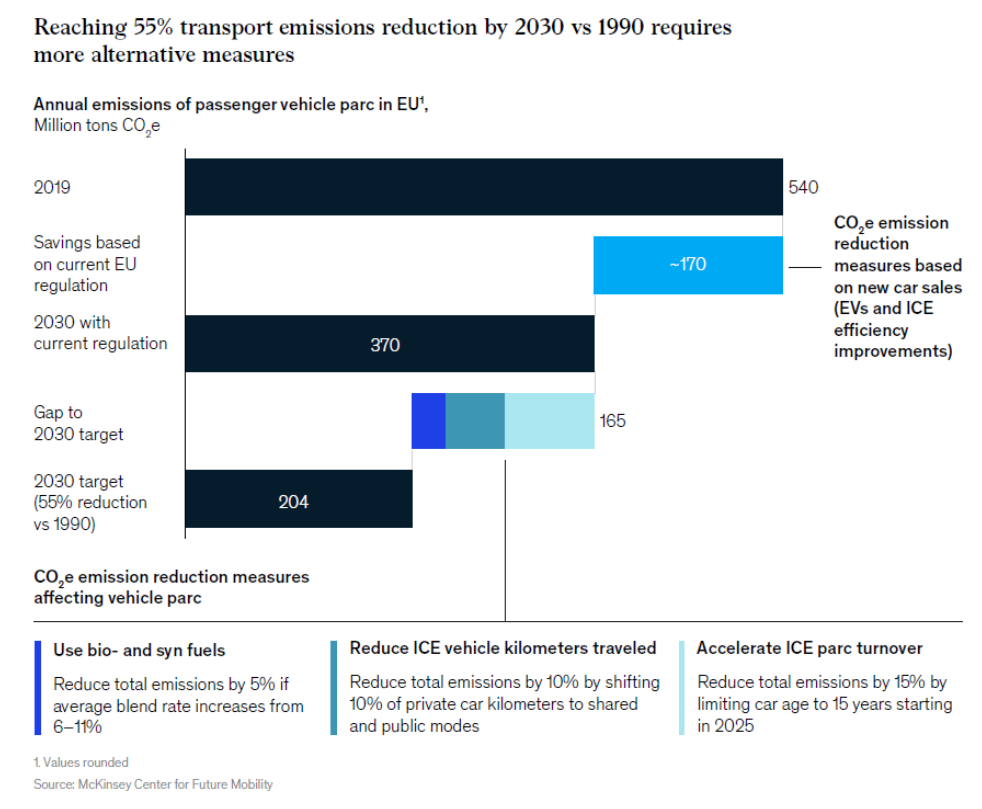
A 55 percent transport emissions reduction target by 2030 versus 1990  requires more drastic measures

The research point out that the current regulation and targets are not sufficient if the road transport sector wants to fully contribute to the 55 percent CO2e emission reduction target by 2030 versus 1990 as required by the Fit for 55 program. 

However, passenger cars have one advantage over other industries from a decarbonization point: The zero-emissions option (e.g., the BEV) is cheaper than the current alternative (ICE) from a total cost of ownership perspective in some countries today and by 2025 at the latest in countries without incentives.This is not the case in most other industries, where decarbonizing results in higher costs for both producers and consumers.

However, with the average car age at ten years in Europe, it will take time for EV sales to have an impact at the parc level. The current regulation on sales is therefore not sufficient to meet the goal of a 55 percent emissions reduction from 1990 levels by 2030. Closing this gap, stress the researchers, will require further measures  targeting CO2e emissions of the vehicle park. ICE vehicle kilometers traveled could be decreased by reducing private car kilometers, increasing shared mobility, and changing consumer perspectives on walking/biking. 

At the same time, the most efficient lever is to  accelerate the ICE parc turnover and remove highly polluting ICE vehicles from the fleet with, for example, “cash-for-clunkers” programs for old ICE cars. Another way to reduce CO2e emissions from ICE vehicles is to increase the share of bio- and e-fuels as these have a low carbon footprint and are  compatible with the existing ICE parc. However, the majority of bio- and e-fuels supply will be required to decarbonize marine/aviation and commercial road transport, for which only limited zero-emissions alternatives exist today.

Conclusion

Electric vehicles are coming, and we are on the right track regarding decarbonizing the transport sector, though more actions need to be taken.  It is an industry transformation taking place at  unprecedented speed. It is also crossing industry borders, involving energy, infrastructure, mobility, and automotive players. While a major challenge, it represents a huge opportunity for incumbents  and new players to take a leading role in creating  new multi-billion industries and jobs. The key, the author emphasizes, will  be to couple sustainability with economic viability through innovative technology and properly guided mobility transformation. Based on its diverse mobility landscape, its focus on sustainability and its proven technology leadership, Europe could  emerge as a role model for other regions globally.

La normativa come fattore chiave per lo sviluppo di nuovi paradigmi di mobilità connessa e smart (Parte 2)

Nel precedente articolo di questa serie, dedicato anch’esso all’approfondimento della tematica normativa, sono stati analizzati tre ambiti di riferimento a livello europeo rispetto alla gestione e all’utilizzo dei dati (personali e non-personali, ma legati ai contesti della mobilità connessa e smart) e alcuni aspetti della normativa competitiva in riferimento ai modelli di business di piattaforma e alla realizzazione / all’offerta di servizi digitali.

L’analisi ha messo in luce alcuni aspetti chiave per lo sviluppo di un nuovo paradigma di mobilità connessa in cui i dati e il relativo scambio sono centrali. Inoltre, sono emersi l’importanza dell’attore pubblico e, nell’ottica di massimizzare le opportunità di creazione di valore, la necessità di definire use case specifici in cui valutare la posizione della Pubblica Amministrazione – nello specifico si fa riferimento ai casi in cui i dati scambiati siano ritenuti “personali”.

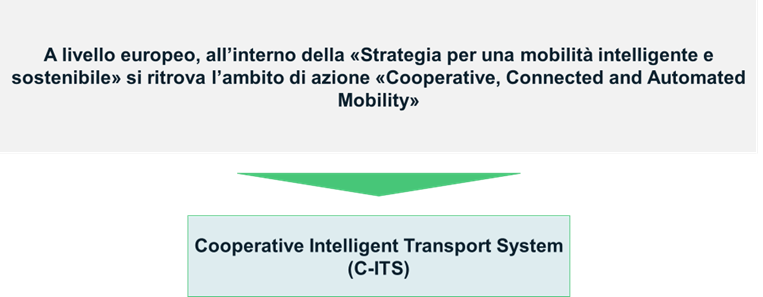
Nel presente articolo sono trattati altri tre aspetti della normativa legati alla mobilità connessa e smart. Al fine di contestualizzare la narrativa, le analisi partono dall’elemento fondante: l’ambito di policy “Cooperative, Connected and Automated Mobility” (CCAM).

Figura 1 Framework di analisi

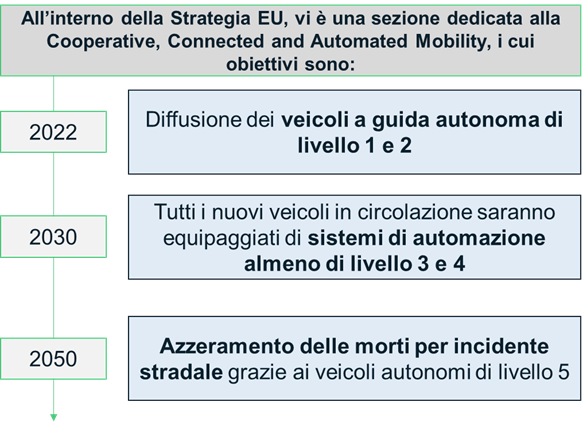
La Commissione Europea ritiene fondamentale definire un piano di azione che prenda in considerazione la sempre maggiore connettività / automazione dei veicoli come fattori determinanti nel migliorare la sicurezza stradale. Nella pianificazione strategica, la Commissione Europea prevede di raggiungere il livello 4 di automazione nel 2020 e il livello 5 nel 2050. Nella visione dell’Istituzione Europea, al 2050, saranno azzerati gli incidenti mortali su strada e si sarà venuto a creare un ecosistema di servizi della mobilità competitivi e innovativi, grazie a normative ad hoc che regoleranno lo scambio dei dati e l’offerta di tali servizi.

Figura 2 Obiettivi della strategia europea per una mobilità intelligente e autonoma

L’automazione dei veicoli è uno degli elementi centrali nella mobilità del futuro, ma, assieme ad esso, sarà fondamentale sviluppare un ecosistema di interazione tra veicoli e infrastrutture stradali. A novembre 2016, è stata definita una strategia ad hoc, chiamata “Cooperative, Infrastructure Transport Systems” (C-ITS). L’obiettivo è definire gli aspetti regolatori e operativi che consentiranno agli utenti della strada e ai gestori del traffico di condividere i dati e di utilizzarli come input nella creazione di nuove offerte di valore.

Per raggiungere la visione di azzeramento degli incidenti e per promuovere la creazione di un ecosistema europeo di mobilità connessa e autonoma, la Commissione Europea ha scelto di definire alcuni strumenti normativi da implementare in maniera uniforme in tutto il territorio europeo. Il primo di questi è dato dalla Direttiva 2010/40 sul quadro generale per la diffusione dei sistemi di trasporto intelligenti nel settore del trasporto stradale e nelle interfacce con altri metodi di trasporto. Tale Direttiva è considerata una pietra miliare per lo sviluppo dei sistemi di infrastrutture connesse in Europa. Sin dal 2019, gli stakeholder dell’ecosistema della mobilità hanno segnalato la necessità di aggiornare la Direttiva 2010/40 per far fronte alle innovazioni tecnologiche e per normare le nuove opportunità di creazione di valore.

A seguito di un percorso di consultazioni pubbliche e al coinvolgimento delle associazioni di categoria a livello europeo, la Commissione Europea ha proposto, a dicembre 2021, una modifica alla Direttiva con l’obiettivo di accelerare la transizione dell’Unione Europea verso un’economia digitale e migliorare la disponibilità e l’interoperabilità dei dati digitali nei servizi di mobilità.

Figura 3 I settori prioritari all’interno della revisione della Direttiva 2010/40

Una volta pienamente attuata, la nuova Direttiva favorirebbe la creazione di un sistema di infrastrutture connesse che potrà migliorare la gestione del traffico e della mobilità, fornire informazioni dettagliate agli utenti della strada, ottimizzare il funzionamento del trasporto pubblico e la gestione delle flotte e del trasporto merci. In tal modo, oltre a raggiungere gli obiettivi di aumento della sicurezza stradale, sarà possibile sviluppare un sistema di trasporto più intelligente e interoperabile che consentirà di gestire in maniera più efficiente la mobilità e di promuovere lo sviluppo di nuovi servizi.

A livello europeo, la trattazione del paradigma Mobility-as-a-Service si ritrova quasi esclusivamente all’interno della Direttiva ITS e nella sua revisione, precedentemente descritta.

Nel 2017, in linea con quanto previsto nella Direttiva 2010/40, è stata emanata una Delegated Regulation (2017/1926) che ha previsto la creazione dei cosiddetti National Access Point – ovvero delle interfacce digitali in cui è possibile accedere ad alcuni dati e metadati. In particolare, questo strumento è stato utilizzato al fine di fornire dati statici e dinamici sulla mobilità e sul traffico con piena compatibilità e interoperabilità attraverso enti, ad esempio i fornitori europei di servizi di trasporto.

All’interno del nuovo documento della Direttiva ITS (Direttiva 2010/40 revisione 2021) viene dedicata una sezione alle offerte di mobilità come servizio e alla multimodalità. In questo caso, non sono ancora stati emanati atti di legge, viene però segnalata la necessità di introdurre normative che puntino a uniformare i sistemi di pagamento e l’interoperabilità dei dati al fine di favorire la creazione di un sistema di Mobility-as-a-Service diffuso ed efficiente.

Oltre a quanto contenuto nella Direttiva ITS, è possibile individuare alcune ulteriori normative che vanno a definire aspetti del paradigma di Mobility-as-a-Service, principalmente legati ai dati. Vi sono infatti normative – ad esempio Directive 2019/1024, Regulation 886/2013, Regulation 2019/1150 – che regolano la gestione e la possibilità di utilizzare i dati in possesso dell’attore pubblico, lo scambio dei dati raccolti dalle infrastrutture cittadine e i sistemi di scambio dati in un ambiente di mobilità multimodale.

Un ultimo aspetto normativo che ci preme segnalare, in linea con la Vision Zero di OCTO, è relativo alla sicurezza stradale. Dal 6 luglio 2022 è entrata in vigore la nuova “Vehicle General Safety Regulation” che introduce una serie di sistemi avanzati di assistenza alla guida obbligatori per migliorare la sicurezza stradale e stabilisce il quadro giuridico per l’omologazione dei veicoli automatizzati e completamente privi di conducente all’interno dell’UE. Secondo quanto riportato dalla Commissione Europea, “le nuove misure di sicurezza contribuiranno a proteggere i passeggeri, i pedoni e i ciclisti in tutta l’UE, salvando presumibilmente oltre 25.000 vite ed evitando almeno 140.000 lesioni gravi entro il 2038”. Con l’entrata in vigore del nuovo regolamento sulla sicurezza, la Commissione Europea potrà finalmente completare il quadro giuridico per i veicoli autonomi e connessi – nei prossimi mesi sono attese nuove norme per l’omologazione, il testing e la circolazione delle nuove tipologie di veicoli.

La tecnologia ci aiuta ad aumentare il livello di sicurezza delle nostre auto. Le nuove caratteristiche di sicurezza avanzate e obbligatorie contribuiranno ulteriormente a ridurre il numero di vittime. Oggi ci assicuriamo anche che le nostre norme ci consentano di introdurre in modo sicuro i veicoli autonomi e senza conducente nell’UE, in un quadro che pone al centro la sicurezza delle persone”, Margrethe Vestager, Executive Vice-President for a Europe fit for the Digital Age

La definizione di un quadro normativo sempre più completo e allineato con gli sviluppi tecnologici potrà abilitare la creazione di un nuovo ecosistema di mobilità connessa e smart. A tal fine, sarà fondamentale individuare delle nuove modalità di collaborazione tra gli attori, in particolare tra pubblico e privato, tali da favorire lo scambio di dati e lo sviluppo sinergico di nuovi servizi di mobilità in una logica di co-operazione.

Nel prossimo articolo di questa serie sarà data una vista sullo stato di avanzamento delle attività di sviluppo dei 14 progetti pilota di OCTO e The European House – Ambrosetti.

Autore:

The European House – Ambrosetti

Regulation as a key factor in the development of new connected and smart mobility paradigms (Part two)

The previous article in this series, also dedicated to an in-depth examination of regulatory issues, analysed three areas of reference at the European level with respect to the management and use of data (personal and non-personal, but related to the contexts of connected and smart mobility) and some aspects of competitive regulation with reference to platform business models and the realisation/offer of digital services.

The analysis highlighted some key aspects for the development of a new paradigm of connected mobility in which data and its exchange are central. In addition, the importance of the public actor and, with a view to maximising value creation opportunities, the need to define specific use cases in which to assess the position of the public administration – specifically, reference is made to cases in which the data exchanged are considered ‘personal’ – emerged.

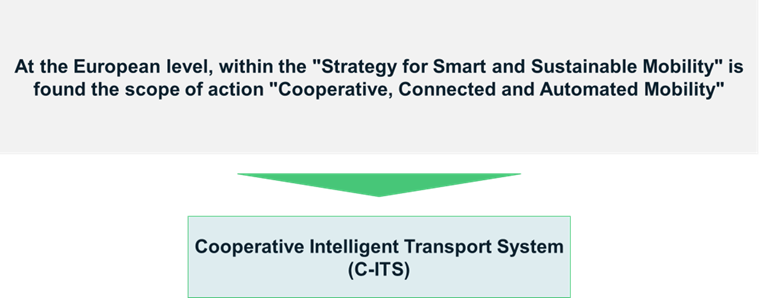
In this article, three further aspects of legislation related to connected and smart mobility are discussed. In order to contextualise the narrative, the analysis starts with the founding element: the policy area ‘Cooperative, Connected and Automated Mobility’ (CCAM).

Figure 1 Analysis framework

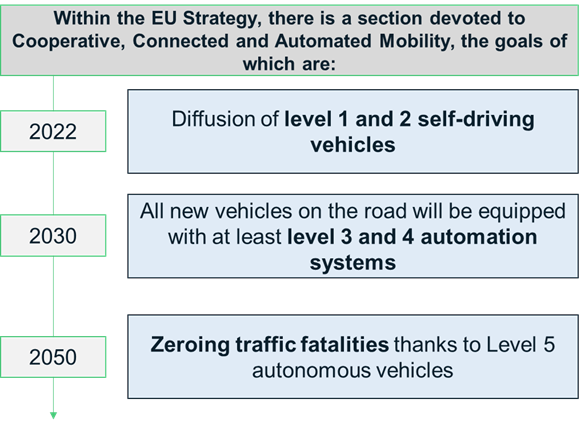
The European Commission considers it essential to define an action plan that takes into account the increasing connectivity/automation of vehicles as determining factors in improving road safety. In its strategic planning, the European Commission envisages reaching level 4 automation in 2020 and level 5 in 2050. In the vision of the European Institution, by 2050, fatal road accidents will have been reduced to zero and an ecosystem of competitive and innovative mobility services will have been created, thanks to ad hoc regulations governing the exchange of data and the provision of such services.

Figure 2 Objectives of the European Strategy for Smart and Autonomous Mobility

Vehicle automation is one of the central elements in the mobility of the future, but along with it, it will be crucial to develop an ecosystem of interaction between vehicles and road infrastructure. In November 2016, an ad hoc strategy was defined, called ‘Cooperative, Infrastructure Transport Systems’ (C-ITS). The aim is to define the regulatory and operational aspects that will enable road users and traffic managers to share data and use it as input in the creation of new value offers.

In order to achieve the vision of zero accidents and to promote the creation of a European ecosystem of connected and autonomous mobility, the European Commission has chosen to define a number of regulatory instruments to be implemented uniformly throughout Europe. The first of these is Directive 2010/40 on the general framework for the deployment of intelligent transport systems in the field of road transport and interfaces with other transport methods. This Directive is considered a milestone for the development of connected infrastructure systems in Europe. Since 2019, stakeholders in the mobility ecosystem have been signalling the need to update Directive 2010/40 to cope with technological innovations and to regulate new opportunities for value creation.

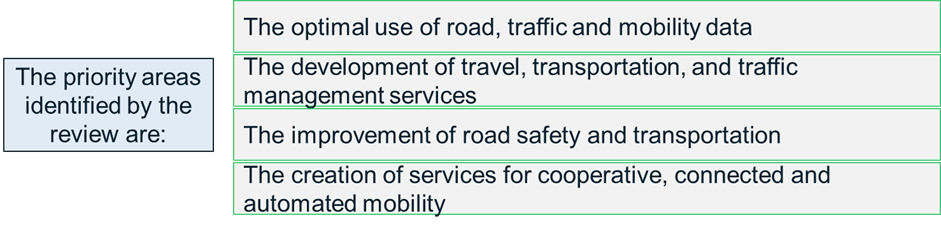
Following a public consultation process and the involvement of trade associations at European level, the European Commission proposed an amendment to the Directive in December 2021 with the aim of accelerating the EU’s transition to a digital economy and improving the availability and interoperability of digital data in mobility services.

Figure 3 Priority areas within the revision of Directive 2010/40

Once fully implemented, the new directive would favour the creation of a connected infrastructure system that can improve traffic and mobility management, provide detailed information to road users, optimise the operation of public transport and fleet and freight management. In this way, in addition to achieving the objectives of increasing road safety, it will be possible to develop a more intelligent and interoperable transport system that will make it possible to manage mobility more efficiently and promote the development of new services.

At European level, the treatment of the Mobility-as-a-Service paradigm is found almost exclusively within the ITS Directive and its revision, described above.

In 2017, in line with the provisions of Directive 2010/40, a Delegated Regulation (2017/1926) was issued that provided for the creation of so-called National Access Points – i.e. digital interfaces where certain data and metadata can be accessed. In particular, this tool was used in order to provide static and dynamic mobility and traffic data with full compatibility and interoperability across entities, e.g. European transport service providers.

In the new ITS Directive document (Directive 2010/40 revision 2021), a section is devoted to mobility-as-a-service and multimodality offers. In this case, no legal acts have yet been issued, but the need to introduce regulations aiming at the standardisation of payment systems and data interoperability in order to foster the creation of a widespread and efficient Mobility-as-a-Service system is pointed out.

In addition to the contents of the ITS Directive, it is possible to identify some further regulations that define aspects of the Mobility-as-a-Service paradigm, mainly related to data. There are in fact regulations – e.g. Directive 2019/1024, Regulation 886/2013, Regulation 2019/1150 – that regulate the management and use of data held by the public actor, the exchange of data collected by city infrastructures and data exchange systems in a multimodal mobility environment.

A final regulatory aspect that we would like to point out, in line with OCTO’s Vision Zero, relates to road safety. As of 6 July 2022, the new ‘Vehicle General Safety Regulation‘ came into force, which introduces a series of mandatory advanced driver assistance systems to improve road safety and establishes the legal framework for the type approval of automated and fully driverless vehicles within the EU. According to the European Commission, “the new safety measures will help to protect passengers, pedestrians and cyclists across the EU, allegedly saving more than 25,000 lives and preventing at least 140,000 serious injuries by 2038“. With the entry into force of the new safety regulation, the European Commission will finally be able to complete the legal framework for autonomous and connected vehicles – new rules for type approval, testing and circulation of the new vehicle types are expected in the coming months.

Technology is helping us to increase the safety level of our cars. New advanced and mandatory safety features will further contribute to reducing the number of fatalities. Today, we are also making sure that our rules allow us to safely introduce autonomous and driverless vehicles in the EU, within a framework that puts people’s safety at the centre,” Margrethe Vestager, Executive Vice-President for a Europe fit for the Digital Age

The definition of a regulatory framework that is increasingly complete and aligned with technological developments may enable the creation of a new ecosystem of connected and smart mobility. To this end, it will be essential to identify new methods of collaboration between actors, particularly between the public and private sectors, such as to encourage the exchange of data and the synergic development of new mobility services in a logic of co-operation.

The next article in this series will give an overview of the progress of the development activities of the 14 pilot projects of OCTO and The European House – Ambrosetti.

Author:

The European House – Ambrosetti
Become
a Contributor!
We’re always looking for interesting ideas and content to share within our community.
Get in touch and send your proposal to: press@octotelematics.com