Request a Demo

Regulation as a key factor in the development of new paradigms of connected and smart mobility (Part one)

The previous articles in this series presented the main points that emerged from the seven working tables, organised by OCTO and The European House – Ambrosetti, and the supporting evidence.

This article presents an analysis of regulatory issues, which are considered a pivotal and enabling element for the success of any technological experimentation – in fact, even from the development activities of ongoing pilot projects with some City Administrations and other private actors, the need to understand how to manage the exchange of data between multiple stakeholders in the context of mobility (in the specific case of the experiments related to the implementation of some of the pilot projects identified by OCTO and The European House – Ambrosetti during 2021) has emerged.

In the ecosystem model for mobility embraced by OCTO and The European House – Ambrosetti, data and its exchange have to be seen as the enablers of innovative services for mobility aligned with OCTO’s Vision Zero (zero traffic, zero accidents and zero pollution). As already mentioned, in the course of the 2022 activities, the topic of data exchange proved to be central both in the working tables and in the realisation activities of the pilot projects.

Already in 2021, data collection and exchange had been identified as central elements for the development of the “Italian way to connected mobility”. In the vision of OCTO and The European House – Ambrosetti, the possibility of exchanging information between different sources and subjects allows the entry of new specialised players capable of effectively and efficiently developing new verticals and service areas or new customer experience models.
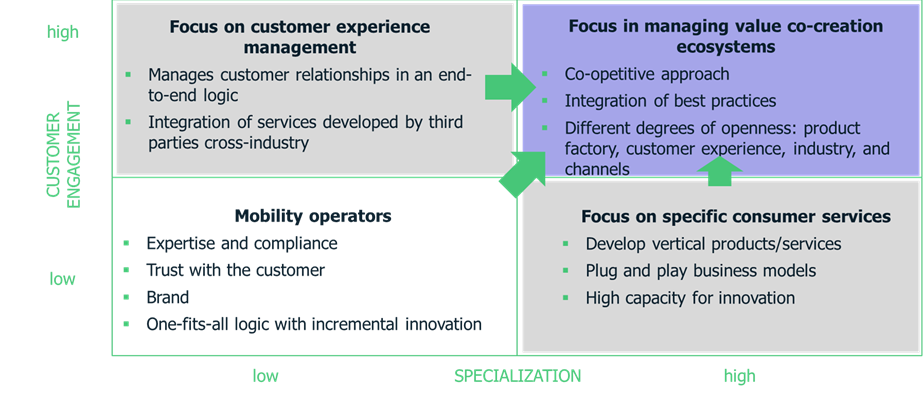
Figure 1 The vision of OCTO and The European House – Ambrosetti: focus on managing value ecosystems
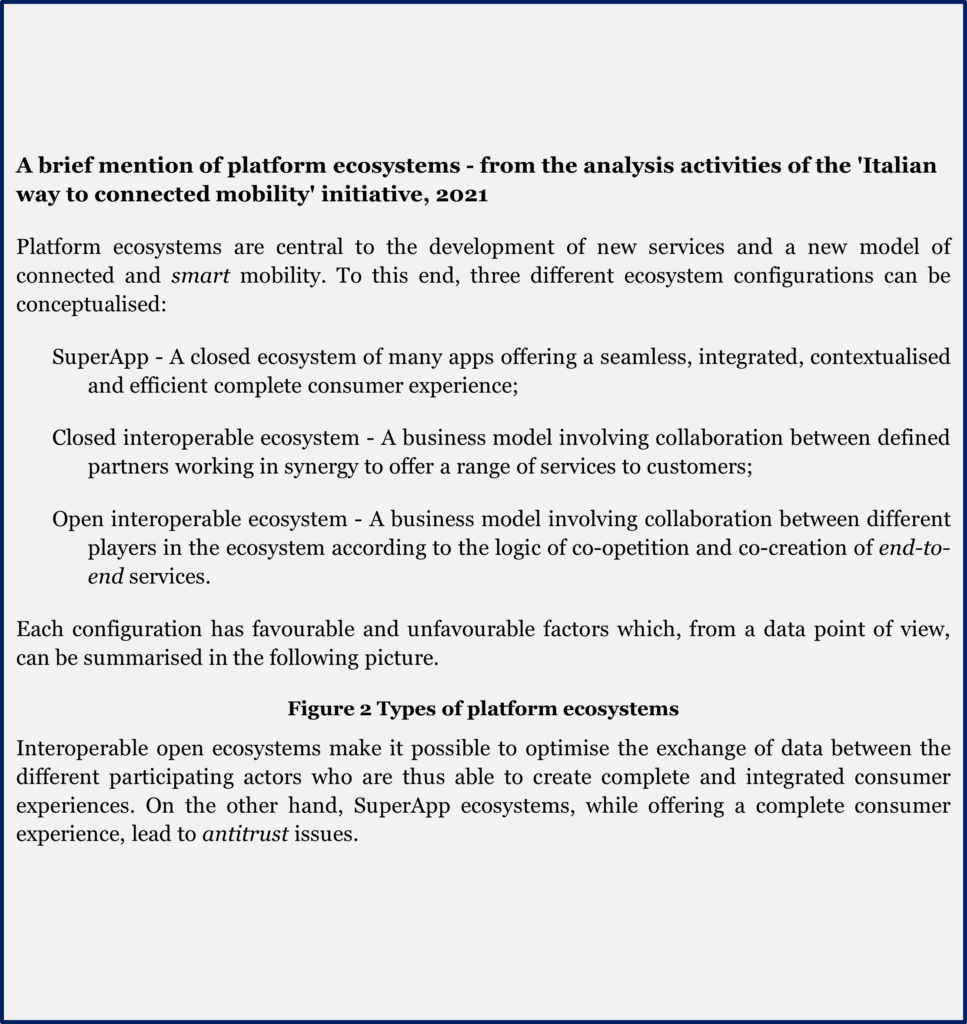
The concepts of data sharing and ecosystem models are fundamental to introducing the normative topic addressed in this article. Data sharing is indeed an enabling element in three key areas of mobility:

  • Connected infrastructures – data are key to building smart contexts in which infrastructure, vehicles and road users are able to talk to each other;
  • New mobility models – e.g. Mobility-as-a-Service (MaaS), data enable the definition of new competitive spaces and are an enabling factor for efficient mobility services, built around the MaaS paradigm;
  • Innovative mobility services – within the already mentioned contexts, connected infrastructures and MaaS models, it is possible to idealise the co-participation of different actors in the co-creation of new service offers, made possible through the exchange and processing of data.

In this sense, the pilot projects of OCTO and The European House – Ambrosetti envisage the combination of the areas described above to create a new ecosystem of connected and smart mobility. In order to identify the development opportunities for the “Italian Way to Connected Mobility” and define the areas to be focused on, the analyses were focused on the in-depth study of three normative fields:

  • Personal data management – regulated, at European level, by the GDPR (General Data Protection Regulation), which regulates the management of personal data and its exchange;
  • Management of data exchanged on digital platforms – managed from 5 July 2022 by the Digital Packages Act, consisting of the Digital Service Act and the Digital Market Act and aimed at regulating the exchange and use of data within digital platform ecosystems;
  • Finally, user trust-building – regulated by the Data Governance Act, which came into force in June 2022 and aims to regulate certain opportunities for data exchange (e.g. Open Data collected by public administrations) and to promote the creation of Data Spaces at European level in strategic areas, including mobility.

Figure 3 The three regulatory frameworks analysed in this article

Within a connected and smart mobility ecosystem – made up of interconnected infrastructures, MaaS services and services developed by different types of actors – different types of data are generated and exchanged, from data on the movements of various means of transport to location data, from aggregated data of mobility service users to data generated by city infrastructures.

As is well known, the GDPR regulates all data that are considered ‘personal’, i.e. data that are directly referable to a specific person.

In this sense, with respect to data collected and managed within a connected ecosystem, it is very important to go and define the applicability of the GDPR regulations on a case-by-case basis. This process is fundamental and encouraged by the European legislation that promotes the collection and use of personal data whenever there is a “legitimate interest” or “public interest” – these cases are in addition to explicit consent (considered by the literature as a possible limiting factor to the full application of the GDPR in contexts of exchange of large amounts of data, so-called Big Data), the presence of a contract, legal obligation and vital interest.

European legislation defines certain use cases in which an actor – public or private – is entitled to collect and use personal data, including:

  • Creating statistics to promote better management and future development of the urban environment;
  • Define city-level policies based on objective and collected data with respect to the specific context;
  • Monitor the status and operation of a fleet of vehicles in order to implement fleet optimisation programmes.

For the purposes of developing the Italian way to connected mobility, the issue of personal data management and exchange certainly needs attention. In particular, considering that many of the pilot projects of OCTO and The European House – Ambrosetti envisage the involvement of City Administrations, it is key to consider the above-mentioned case studies and to investigate, with respect to individual use cases, the applicability or non-applicability of the GDPR regulations.

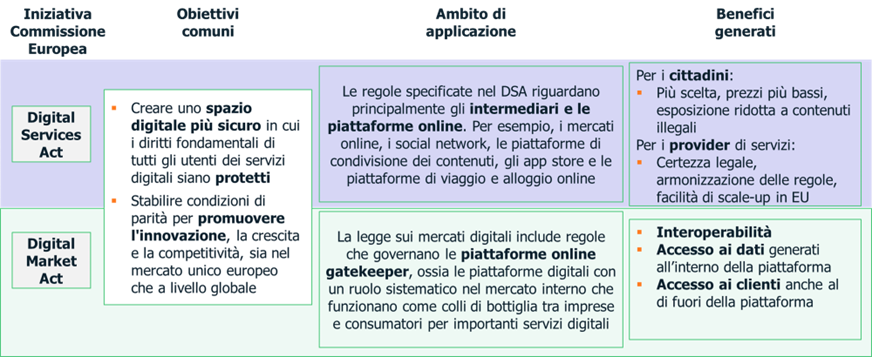
Secondly, for the purposes of creating a digital platform ecosystem, it is important to analyse the regulations contained within the Digital Packages Act, i.e. the body of legislation, adopted by the European Commission on 5 July 2022, which aims to promote greater security for users with respect to the use and management of their data.

The Digital Packages Act consists of the Digital Service Act, aimed at regulating digital intermediaries and platforms, and the Digital Market Act, aimed at regulating the scope of action of platforms that aggregate data collected from users in the first instance.
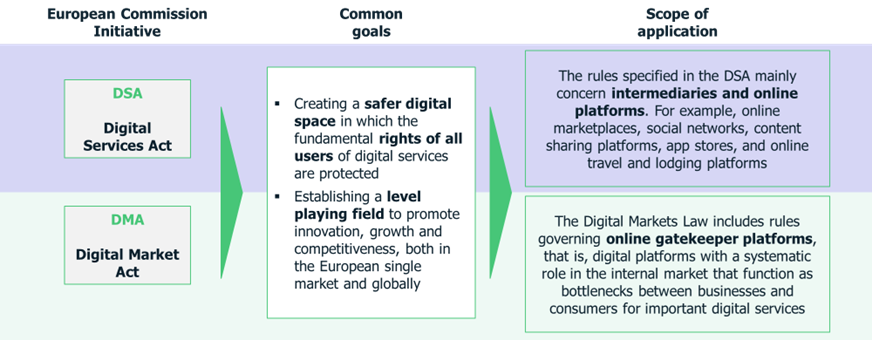
Figure 4 Key elements of the Digital Service Act (DSA) and the Digital Market Act (DMA)

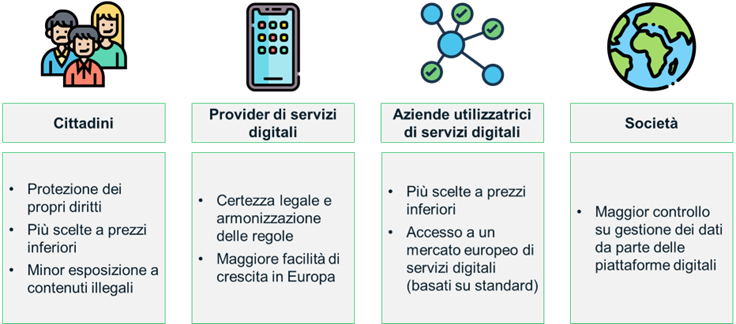
In the vision of the European Commission, the Digital Service Act is meant to protect the data of users of digital services, to improve the management and increase the accountability of digital platforms, and to promote new innovation processes – based on greater certainty of data collection and exchange. The full achievement of these objectives will foster the creation of a number of benefits for market stakeholders, as depicted in the image below.
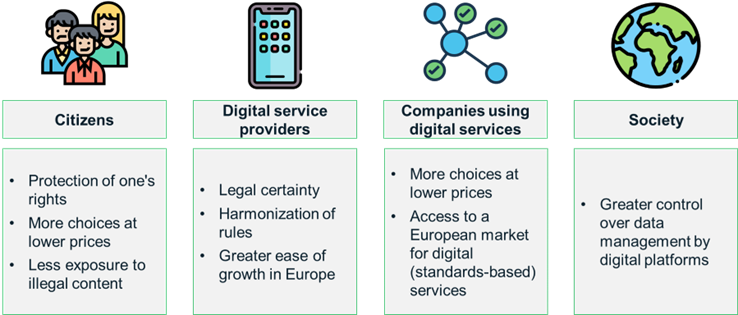
Figure 5 The main benefits enabled by the Digital Service Act as seen by the European Commission

The Digital Market Act is always aimed at regulating digital platforms, but in this case it directly involves the actors defined as ‘gatekeepers’, i.e. those platforms that collect data from users and feed them into digital ecosystems of data exchange. Specifically, the main benefits of the Digital Market Act are:

  • create a fairer environment for companies that depend on gatekeepers to offer their services;
  • eliminate unfair terms and conditions that limit the development of innovators and technology start-ups that exploit the data collected by gatekeeper platforms;
  • offer consumers more choice in services and the possibility of switching providers to have direct access to fairer services and prices.

In order to realise these benefits, the European Commission has defined the activities that will have to be allowed by gatekeeper platforms. In particular, these platforms will have to enable interoperability between their own services and those developed by third parties, allow users to access their own data collected on the platform, and allow companies operating on the platform to carry out promotional activities aimed at signing contracts outside the gatekeeper platform.

Finally, the last piece of legislation to consider in the development of a digital ecosystem for connected and smart mobility relates to the very recent Data Governance Act, which came into force on 23 June 2022 and will be applicable from September 2023.

The Data Governance Act is an instrument considered by the European Commission to be a ‘key pillar‘ to concretise the European Data Strategy. In particular, the Data Governance Act intends to foster data portability and promote greater interoperability between data generated by different sources. To this end, this act supports the creation and development of a common Data Space at the European level that will be realised thanks to the co-participation and collaboration between public and private actors and will collect data on certain areas considered strategic, including mobility.

In the development of this data exchange and collection system, the European automotive industry points out the need to develop the system in line with the principle of technology neutrality. This indication is intended to avoid a predefined set of technologies for data collection and sharing at European level, effectively excluding the maturation of innovative technological tools. The new technologies will have to be developed following the operating standards of the Data Spaces, but leaving it up to the individual market players to innovate modalities, sources and systems of data collection and transmission.

The regulatory frameworks discussed in this article are the key elements to be considered in the development of a new connected and smart mobility ecosystem. In the next article in this series, some central aspects of regulation applied to the specific context of mobility will be explored, in particular the aspects of Connected Infrastructure (C-ITS), Mobility-as-a-Service (MaaS) and Connected and Automated Driving (CAD).

Author:

The European House – Ambrosetti
La normativa come fattore chiave per lo sviluppo di nuovi paradigmi di mobilità connessa e smart (Parte 1)

Nei precedenti articoli di questa serie sono stati presentati i principali punti emersi dai sette tavoli di lavoro, organizzati da OCTO e The European House – Ambrosetti, e le evidenze a supporto.

Questo articolo presenta un’analisi delle tematiche normative, considerate un elemento cardine e abilitante per il successo di qualsiasi sperimentazione tecnologica – infatti, anche dalle attività di sviluppo dei progetti pilota in corso con alcune Amministrazioni Cittadine e altri attori privati, è emersa la necessità di comprendere come gestire lo scambio dei dati tra più interlocutori nel contesto della mobilità (nel caso specifico delle sperimentazioni legate alla realizzazione di alcuni dei progetti pilota identificati da OCTO e The European House – Ambrosetti nel corso del 2021).

Nel modello ecosistemico per la mobilità abbracciato da The European House – Ambrosetti e OCTO, i dati e il relativo scambio sono da considerarsi gli elementi abilitanti di servizi innovativi per una mobilità allineata con la Vision Zero di OCTO (zero traffico, zero incidenti e zero inquinamento). Come già accennato, nel corso delle attività del 2022, la tematica dello scambio dati si è rivelata centrale sia nei tavoli di lavoro sia nelle attività di concretizzazione dei progetti pilota.

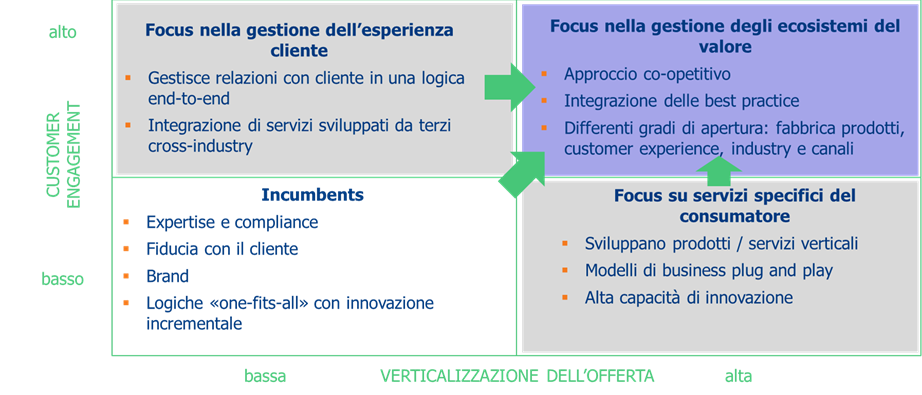
Già nel corso del 2021, la raccolta e lo scambio dei dati erano state identificate come elementi centrali per lo sviluppo della “Via italiana alla mobilità connessa”. Nella visione di The European House – Ambrosetti e OCTO, la possibilità di scambio di informazioni tra sorgenti e soggetti differenti permette l’ingresso di nuovi player specializzati in grado di sviluppare con efficacia ed efficienza nuovi verticali e ambiti di servizio o nuovi modelli di esperienza per il cliente.

Figura 1 La visione di OCTO e The European House – Ambrosetti: focus nella gestione degli ecosistemi del valore

I concetti di scambio dati e di modelli ecosistemici sono fondamentali per introdurre l’argomento normativo affrontato nel presente articolo. Lo sharing dei dati è infatti elemento abilitante in tre ambiti chiave della mobilità:

  • Infrastrutture connesse – i dati sono fondamentali per costruire dei contesti smart in cui infrastrutture, veicoli e utenti della strada sono in grado di dialogare;
  • Nuovi modelli di mobilità – ad esempio Mobility-as-a-Service (MaaS), i dati permettono di definire nuovi spazi competitivi e sono un fattore abilitante per rendere efficienti i servizi di mobilità, costruiti attorno al paradigma MaaS;
  • Servizi innovativi per la mobilità – all’interno dei già citati contesti, infrastrutture connesse e modelli MaaS, è possibile idealizzare la compartecipazione di diversi attori alla co-creazione di nuove offerte di servizi, rese possibili attraverso lo scambio e l’elaborazione dei dati.

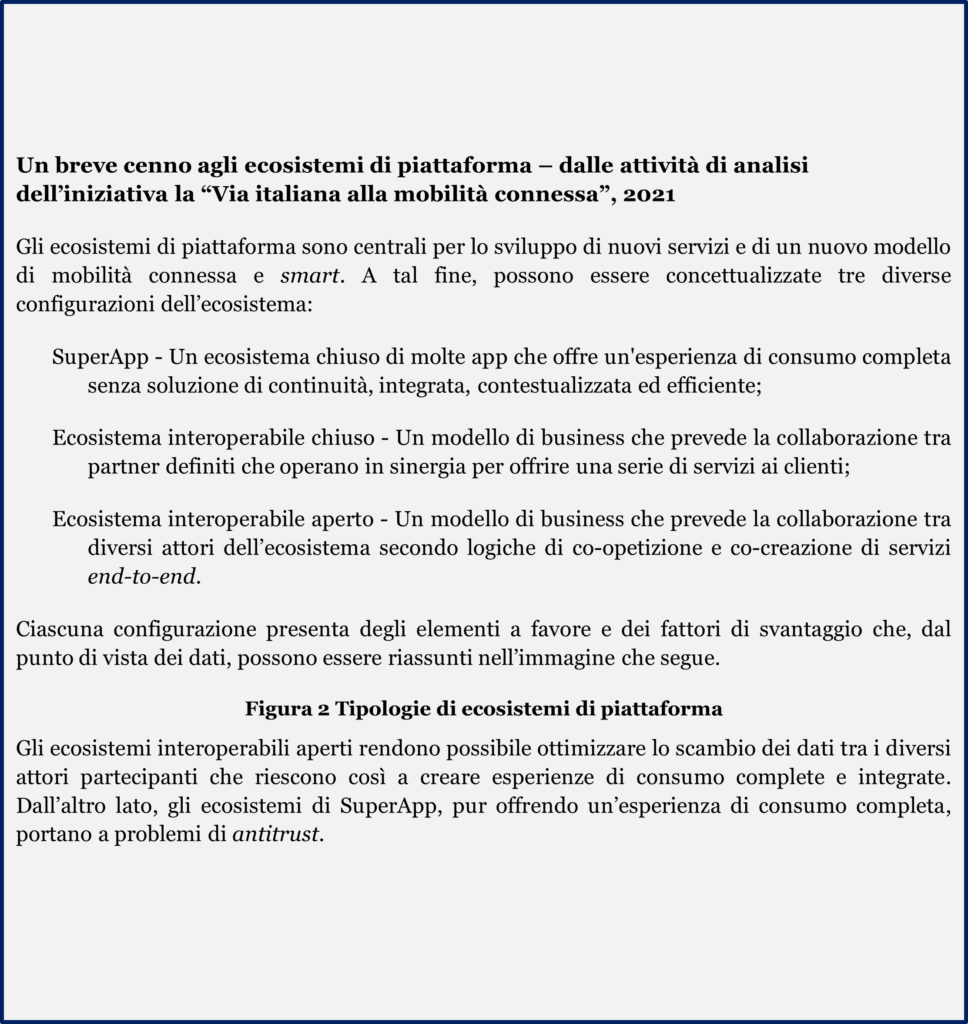
In tal senso, i progetti pilota di OCTO e The European House – Ambrosetti prevedono la combinazione delle aree sopra-descritte per realizzare un nuovo ecosistema di mobilità connessa e smart. Al fine di identificare le opportunità di sviluppo per la “Via italiana alla mobilità connessa” e definire gli ambiti da attenzionare, le analisi sono state incentrate sull’approfondimento di tre campi normativi:

  • Gestione dei dati personali – regolamentato, a livello europeo, dal GDPR (General Data Protection Regulation) che norma la gestione dei dati personali e il relativo scambio;
  • Gestione dei dati scambiati sulle piattaforme digitali – gestito dal 5 luglio 2022 dal Digital Packages Act, composto da Digital Service Act e Digital Market Act e volto a normare lo scambio e l’utilizzo dei dati all’interno degli ecosistemi digitali di piattaforma;
  • Infine, creazione di fiducia da parte degli utenti – normato dal Data Governance Act, entrato in vigore nel giugno 2022 e volto a regolare alcune opportunità di scambio dati (ad es. Open Data raccolti da Pubbliche Amministrazioni) e promuovere la creazione di Data Space a livello europeo in ambiti strategici, tra cui la mobilità.

Figura 3 I tre contesti normativi analizzati nel presente articolo

All’interno di un ecosistema di mobilità connessa e smart – composto da infrastrutture interconnesse, servizi MaaS e servizi sviluppati da diverse tipologie di attori – si generano e si scambiano diverse tipologie di dati, dai dati relativi agli spostamenti dei vari mezzi di trasporto ai dati di localizzazione degli stessi, dai dati aggregati degli utilizzatori dei servizi di mobilità ai dati generati dalle infrastrutture cittadine.

Come noto, il GDPR va a regolamentare tutti i dati che vengono considerati “personali”, ovvero i dati direttamente riferibili a una specifica persona.

In tal senso, rispetto ai dati raccolti e gestiti all’interno di un ecosistema connesso, è molto importante andare a definire caso per caso l’applicabilità della normativa del GDPR. Tale processo è fondamentale e incoraggiato dalla normativa europea che promuove la raccolta e l’utilizzo dei dati personali ogni volta in cui vi sia un “legittimo interesse” o un “pubblico interesse” – queste casistiche si aggiungono al consenso esplicito (considerato dalla letteratura un possibile fattore limitante alla piena applicazione del GDPR in contesti di scambio di grandi moli di dati, cosiddetti Big Data), alla presenza di un contratto, obbligo legale e interesse vitale.

La normativa europea definisce alcuni casi d’uso in cui un attore – pubblico o privato – è legittimato a raccogliere e utilizzare dati personali, tra cui:

  • Creare statistiche per promuovere una migliore gestione e lo sviluppo futuro dell’ambiente urbano;
  • Definire policy a livello cittadino basate su dati oggettivi e raccolti rispetto allo specifico contesto di riferimento;
  • Monitorare lo stato e il funzionamento di una flotta di veicoli al fine di mettere in pratica programmi di ottimizzazione della stessa.

Ai fini dello sviluppo della via italiana alla mobilità connessa, il tema della gestione e dello scambio dei dati personali deve essere certamente attenzionato. In particolare, considerando che molti dei progetti pilota di OCTO e The European House – Ambrosetti prevedono il coinvolgimento delle Amministrazioni Cittadine, risulta chiave considerare le casistiche di cui sopra e approfondire, rispetto ai singoli casi d’uso, l’applicabilità o meno delle norme del GDPR.

In secondo luogo, ai fini della creazione di un ecosistema di piattaforma digitale, è importante analizzare le normative contenute all’interno del Digital Packages Act, ovvero il corpo normativo, adottato dalla Commissione Europea il 5 luglio 2022, che intende promuovere una maggiore sicurezza per gli utenti rispetto all’utilizzo e la gestione dei propri dati.

Il Digital Packages Act è composto dal Digital Service Act, volto a normare gli intermediari e le piattaforme digitali, e dal Digital Market Act, volto a regolare il campo di azione delle piattaforme aggregatrici in prima istanza dei dati raccolti dagli utenti.

Figura 4 Elementi chiave del Digital Service Act (DSA) e del Digital Market Act (DMA)

Nella visione della Commissione Europea, il Digital Service Act ha il compito di proteggere i dati degli utenti di servizi digitali, migliorare la gestione e aumentare la responsabilità delle piattaforme digitali e promuovere nuovi processi di innovazione – basati su una maggiore certezza di raccolta e scambio dei dati. Il pieno raggiungimento di tali obiettivi favorirà la creazione di una serie di benefici per gli stakeholder del mercato, come descritto nell’immagine che segue.

Figura 5 I principali benefici abilitati dal Digital Service Act nella visione della Commissione Europea

Il Digital Market Act è rivolto sempre a regolamentare le piattaforme digitali, ma in questo caso coinvolge direttamente gli attori definiti “gatekeeper”, ovvero quelle piattaforme che raccolgono i dati dagli utenti e li immettono all’interno di ecosistemi digitali di scambio dati. Nello specifico, i principali benefici del Digital Market Act sono:

  • creare un ambiente più equo per le aziende che dipendono dai gatekeeper per offrire i loro servizi;
  • eliminare termini e condizioni inique che limitano lo sviluppo di innovatori e delle start-up tecnologiche che sfruttano i dati raccolti dalle piattaforme gatekeeper;
  • offrire maggiore scelta per i consumatori nei servizi e la possibilità di cambiare fornitore per avere accesso diretto a servizi e prezzi più equi.

Al fine di realizzare tali benefici, la Commissione Europea ha definito le attività che dovranno essere consentite dalle piattaforme gatekeeper. In particolare, tali piattaforme dovranno abilitare l’interoperabilità tra i propri servizi e quelli sviluppati da terze parti, permettere agli utenti di accedere ai propri dati raccolti sulla piattaforma, consentire alle aziende che operano sulla piattaforma di svolgere attività promozionale finalizzata alla stipula di contratti al di fuori della piattaforma gatekeeper.

Infine, l’ultima normativa da considerare nello sviluppo di un ecosistema digitale per la mobilità connessa e smart è relativa al recentissimo Data Governance Act, entrato in vigore dal 23 giugno 2022 e applicabile da settembre 2023.

Il Data Governance Act è uno strumento considerato dalla Commissione Europea un “key pillar” per concretizzare la European Data Strategy. In particolare, il Data Governance Act intende favorire la portabilità dei dati e promuovere una maggiore interoperabilità tra dati generati da fonti diverse. A tal fine, tale atto supporta la creazione e lo sviluppo di un comune Data Space a livello europeo che sarà realizzato grazie alla compartecipazione e alla collaborazione tra attori pubblici e privati e raccoglierà i dati su alcuni ambiti ritenuti strategici, tra cui la mobilità.

Nello sviluppo di tale sistema di scambio e raccolta dati, l’industria europea dell’automotive segnala la necessità di sviluppare il sistema in linea con il principio della technology neutrality. Tale indicazione intende evitare che, a livello europeo, venga indicato un set predefinito di tecnologie per la raccolta e la condivisione di dati, escludendo di fatto la maturazione di strumenti tecnologici innovativi. Le nuove tecnologie dovranno essere sviluppate seguendo gli standard operativi di funzionamento dei Data Space, ma lasciando ai singoli operatori del mercato la possibilità di innovare modalità, fonti e sistemi di raccolta e trasmissione dei dati.

Gli ambiti normativi trattati nel presente articolo sono da ritenersi gli elementi chiave da considerare nello sviluppo di un nuovo ecosistema di mobilità connessa e smart. Nel prossimo articolo di questa serie saranno approfonditi alcuni aspetti centrali della normativa applicata al contesto specifico della mobilità, in particolare agli aspetti di infrastrutture connesse (C-ITS), Mobility-as-a-Service (MaaS) e Connected and Automated Driving (CAD).

Autore:

The European House – Ambrosetti

OCTO Smart Hospitality The Future of the Tourism & Hospitality sector is digital

OCTO introduces “Smart Hospitality”, a suite of solutions designed to accelerate the digitalization of the Tourism & Hospitality industry.  


Rome, July 20th, 2022 – For the Hospitality & Services sector, the Customer Experience is one of the key growth factors to guarantee business profitability. Customer service requires investments in innovation, marketing and those technologies that are giving rise to new business models whose true engine for future developments is to be found in digitization. 

OCTO Smart Hospitality has been designed with these premises in mind; it provides a single access point to integrate the entire rental process – from online travel agencies to guests and third parties – and house management services to business partners.  

Based on the potential of the Internet of Things (IoT), the OCTO Smart Hospitality solution changes the hospitality industry and upgrades the way hotels, resorts, B&Bs – but also cruise ships, casinos, restaurants and other businesses’ leisure services – automate processes, collect data and interface with the users by offering them innovative digital services. 

The combination of IoT and data analysis capabilities allows OCTO Smart Hospitality to improve the guest experience with new digital services that optimize processes, reduce operating costs, and provide innovative services capable of responding to the customization needs of an increasingly sophisticated user. Besides, OCTO’s solution makes the hospitality structures smarter and more efficient thanks to proactive monitoring of critical issues while guaranteeing maximum safety for the guests and the owners alike.


OCTO Smart Home integration for total connectivity


OCTO Smart Hospitality simplifies booking operations by remotely managing access to the structure itself and enriches the guest experience thanks to the OCTO Smart Home services, a suite of digital connectivity telematic solutions and home management and security services, allowing a fully digital experience of the hosting spaces, tailored to the needs of each guest. 

Thanks to the native integration with the online booking platforms, the host automatically gets the reservation on the OCTO Hospitality App and can remotely manage access. The hospitality site is entered thanks to a virtual key: the App includes a smart electronic key allowing guests to access the premise autonomously and in full security. 

The integration of chat, video call and e-mail allows the host and the guest to easily communicate with each other, exchange documents and simplify onboarding and check-in procedures.

General information on the surroundings, places of interest etc., can be shared with the guests, who can also access information on home care, rules to follow, emergency numbers and much more.


Connectivity between travel agencies and hosts


OCTO Smart Hospitality also integrates a Channel Manager that allows the hosts to manage their properties’ availability simultaneously on multiple online booking platforms without conflicts. Each time a reservation is made, the solution notifies the host premise to allow access configuration for the guest, synchronize booking calendars and manage cleaning, maintenance, repairs, etc. 

According to a report on Hotel Real Estate in Italy[1], presented recently, the hospitality market is valued at 116,3 billion euros, despite the historical transitional period the sector is going through and it is expected to keep growing in the upcoming years.

Despite the pandemic and the war in Ukraine, entrepreneurs have chosen to renovate existing premises and create new products and services. As of today, there are 819 renovation and new construction activities underway; 65% of which will be completed by the end of 2022. 71% of these activities are newly established, a harbinger of the advent of more and more state-of-the-art hosting premises for which digitization, the IoT and the ability to optimize services through technology will be increasingly indispensable. 

OCTO Smart Hospitality gathers in a single suite of products and services an unforgettable user experience for both the guests and their hosts, one they will no longer be able to do without.


About OCTO Telematics

Founded in 2002, OCTO is a leading provider of telematic services and advanced data analytics for the Insurance sector, and increasingly one of the leading companies offering solutions for Fleet Telematics and Smart Mobility. With OCTO’s unique propositions already established in the field of Insurtech and Smart Mobility, OCTO continues to expand in new sectors and international markets. In the context of an increasingly connected world, OCTO’s advanced analytics and it’s set of IoT Big Data, generates actionable analytics giving life to a new era of Smart Telematics. Today it has over 5.5 million connected users and the largest database of vehicle telematics data in the world, with over 303 billion miles of driving data collected and 493,000 claims and insurance events analysed. It also manages over 400,000 vehicle rentals per month. For more information, visit www.octotelematics.com


OCTO Telematics Media contact   

Adriana Zambon   

+39 339.3995640   

press@octotelematics.com

[1] Report on Hotel Real Estate produced by the research department of Wcg and Pkf, in collaboration with Nomisma, Rics, Associazione italiana Confindustria Alberghi and Federalberghi Roma (2022) 


Ecosistemi e spazi dati per la co-creazione di servizi

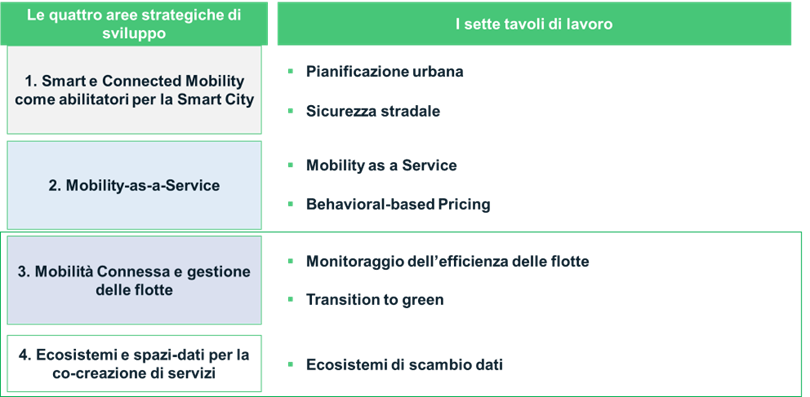
In questo ultimo articolo sono descritti i messaggi chiave emersi nel corso dell’ultimo tavolo organizzato da The European House – Ambrosetti e OCTO Telematics con le aziende e le istituzioni leader in Italia nella realizzazione di progetti di mobilità connessa. In particolare, il tavolo di lavoro analizzato nel presente articolo verteva su temi di straordinaria importanza per quanto concerne l’innovazione dei modelli di business dei servizi di mobilità, ovvero gli “Ecosistemi e gli spazi-dati per la co-creazione di servizi”.

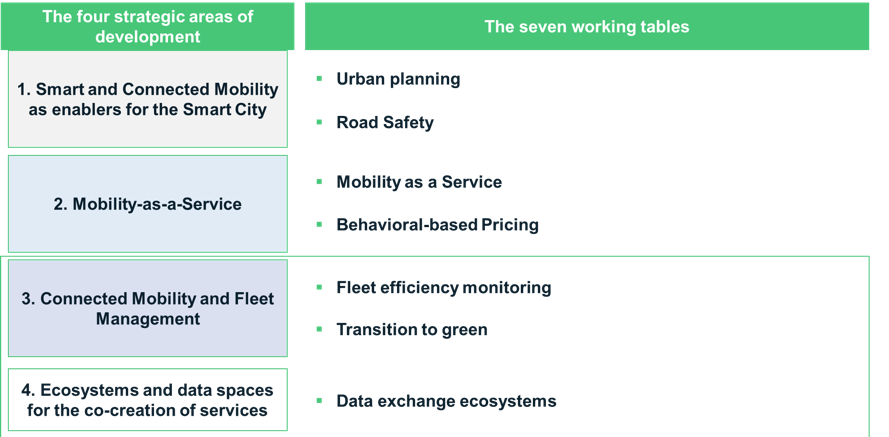
OCTO e The European House – Ambrosetti hanno organizzato, per il secondo anno consecutivo, un’intensa attività di stakeholder engagement – coinvolgendo oltre 40 attori – con l’obiettivo di comprendere le reali esigenze degli attori della mobilità e promuovere uno sviluppo sinergico di un nuovo paradigma di mobilità connessa, sostenibile e smart.

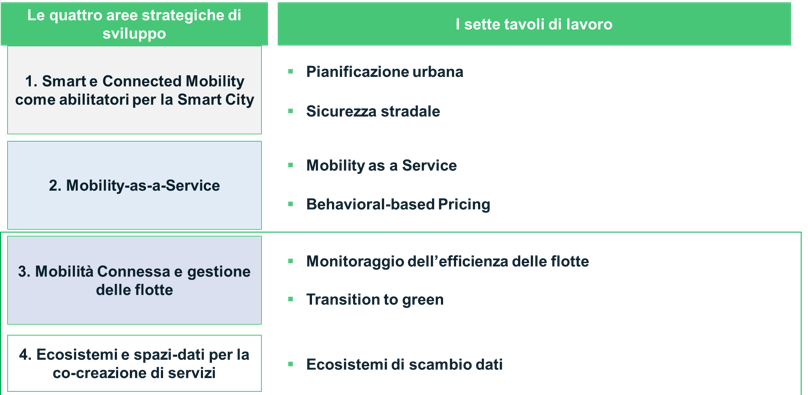
Figura 1 Le quattro aree strategiche di sviluppo e i sette tavoli di lavoro

Data exchange ecosystems

Dedicato agli ecosistemi di scambio dati – un ambito dalla valenza orizzontale rispetto a tutti gli altri temi trattati nel percorso di stakeholder engagement, l’ultimo tavolo di lavoro è partito da una definizione chiara di cosa sia un data space precisando cosa questo “non è”.

Un data space non è un data pool ovvero uno spazio – o infrastruttura, in cui i dati vengono accumulati. Un data space non è un modo con cui fare data sharing. Infine, un data space non identifica una tecnologia o un’architettura IT.

Un data space è nuovo concept che consente di condividere informazioni – non dati – all’interno di una federazione sicura di stakeholder, mantenendo l’ownership dei dati e non prevedendo la loro migrazione. In tal senso, la federazione si basa su un set di regole predefinite rispetto non solo ai formati di condivisione, ma anche rispetto a chi può utilizzare le informazioni condivise e per quali scopi.

Il concept consente di evitare modelli di scambio gratuito di dati eterogenei e spesso difficilmente utilizzabili e, per contro, permette di definire modelli in cui sia chiaro lo scambio di valore che interviene tra le parti all’interno di un ambiente certificato in grado di creare “trust” e valore aggiunto per gli stakeholder coinvolti.

In questo modo è possibile rompere i silos che impediscono a oggi di creare valore attraverso i dati (silos legati all’intellectual property, alla mancanza di trust, alla difficoltà tecnica di integrazione, alla mancanza di un business model), abilitando, di fatto, la co-creazione di nuovi servizi e l’innovazione. Si pensi, ad esempio, all’importanza che la condivisione di informazioni avrà nell’abilitare livelli crescenti di automazione nella mobilità, nelle infrastrutture e nell’erogazione dei servizi in cui le scelte deriveranno da approcci basati sull’analisi dinamica dei dati provenienti da diverse fonti.

Di seguito si riportano i messaggi chiave del tavolo di lavoro dedicato agli ecosistemi dati in cui sono intervenuti aziende, istituzioni e accademici per confrontarsi su questo importante tema:

  • Sempre più aziende e Pubbliche Amministrazioni richiedono approcci multidisciplinari e data-driven. All’interno delle Smart City diverse fonti dati possono essere aggregate a formare dei gemelli digitali in cui la lettura combinata dei dati consente di individuare le strategie innovative per la gestione della città e l’erogazione dei servizi;
  • La crescente disponibilità di dati consentirà lo sviluppo di modelli previsionali sempre più complessi che a loro volta permetteranno una pianificazione più avanzata e precisa delle dinamiche all’interno delle città;
  • In futuro sarà fondamentale promuovere una maggiore condivisione di applicazioni e di esperienze tra le pubbliche amministrazioni al fine di massimizzare le opportunità di creazione di valore;
  • Facendo leva sui dati è possibile prevedere un ruolo maggiormente attivo dei cittadini grazie a meccanismi premianti che vadano a valorizzare i comportamenti virtuosi.

Il prossimo articolo di questa serie sarà dedicato all’analisi della normativa a livello EU. Tale elemento è considerato infatti un fattore abilitante per la diffusione del paradigma e degli ecosistemi di mobilità connessa.

Autore:

The European House – Ambrosetti

Ecosystems and data spaces for the co-creation of services

This article describes the key messages that emerged during the last round tables organised by OCTO and The European House – Ambrosetti with leading companies and institutions in Italy in the implementation of connected mobility projects. In particular, the working tables analysed in this article focused on a topic of extraordinary importance about the innovation of mobility service business models, namely “Data Spaces for the Co-Creation of Services”.

OCTO and The European House – Ambrosetti organised, for the second consecutive year, an intense stakeholder engagement activity – involving more than 40 actors – with the aim of understanding the real needs of mobility actors and promoting a synergic development of a new paradigm of connected, sustainable and smart mobility.

Figure 1 The four strategic development areas and the seven working tables

Data exchange ecosystems

The last round table was devoted to data exchange ecosystems – an area of horizontal relevance to all other topics covered in the stakeholder engagement track.

First, it is good to define what a data space is by specifying what it ‘is not’. A data space is not a data pool, i.e. a space – or infrastructure – in which data is accumulated. A data space is not a way of data sharing. Finally, a data space does not identify an IT technology or architecture.

A data space is a new concept that allows information – not data – to be shared within a secure federation of stakeholders, while retaining ownership of the data and not migrating it. In this sense, the federation is based on a set of pre-defined rules with respect not only to sharing formats, but also with respect to who can use the shared information and for what purposes.

The concept makes it possible to avoid models of free exchange of heterogeneous data that are often difficult to use and, on the other hand, makes it possible to define models in which the exchange of value between the parties within a certified environment that creates trust and added value for the stakeholders involved is clear.

In this way, it is possible to break down the silos that currently prevent the creation of value through data (silos related to intellectual property, lack of trust, technical difficulty of integration, and lack of a business model), thus enabling the co-creation of new services and innovation. One thinks, for instance, of the importance that information sharing will have in enabling increasing levels of automation in mobility, infrastructure, and service delivery where choices will derive from approaches based on the dynamic analysis of data from different sources.

Below are the key messages from the Data Ecosystems Roundtable where companies, institutions and academics came together to discuss this important topic:

  • More and more companies and public administrations require multidisciplinary and data-driven approaches. Within Smart Cities, different data sources can be aggregated to form digital twins in which the combined reading of data enables innovative strategies for city management and service delivery;
  • The increasing availability of data will enable the development of increasingly complex forecasting models, which in turn will allow more advanced and precise planning of the dynamics within cities;
  • In the future, it will be crucial to promote greater sharing of applications and experiences between public administrations in order to maximise opportunities for value creation;
  • By leveraging data, it is possible to envisage a more active role for citizens through rewarding mechanisms that enhance virtuous behaviour.

The next article in this series will be dedicated to the analysis of regulation at EU level. Indeed, it is considered an enabling factor for the spread of the connected mobility paradigm and ecosystems.

Author:

The European House – Ambrosetti
The key messages that emerged from the round tables dedicated to Fleet and Transition to green

Key messages that emerged from the working tables with mobility stakeholders

This article describes the key messages that emerged during the round tables organised by OCTO and The European House – Ambrosetti with leading companies and institutions in Italy in the implementation of connected mobility projects. In particular, the working tables analysed in this article focused on the topics of the third strategic area of development, namely “Connected Mobility and Fleet Management ” and “Transition to Green”.

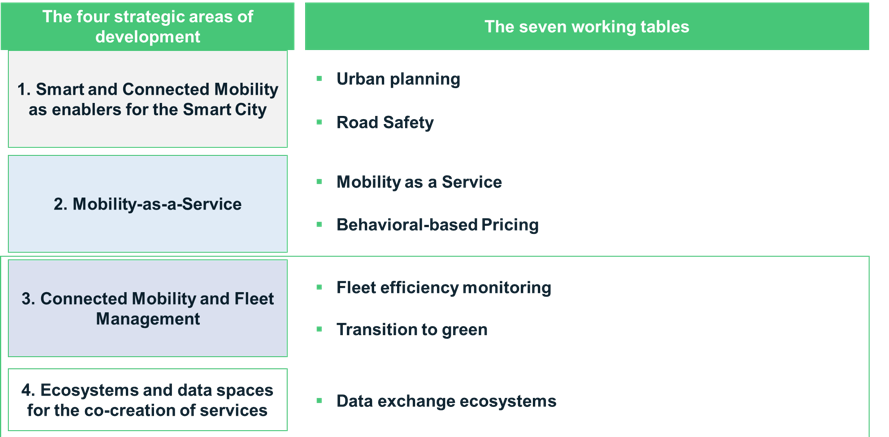
OCTO and The European House – Ambrosetti organised, for the second consecutive year, an intense stakeholder engagement activity – involving more than 40 actors – with the aim of understanding the real needs of mobility actors and promoting a synergic development of a new paradigm of connected, sustainable and smart mobility.

Figure 1 The four strategic development areas and the seven working tables

Fleet Monitoring

The working table on fleet efficiency monitoring was designed with the aim of identifying opportunities for the development of new solutions that could not only enable efficiency and cost-effectiveness benefits for fleet managers, but also foster the definition of operating models closer to customer needs and sustainability goals.

Specifically, the analyses considered different types of fleets: from short-term rental fleets to long-term rental, from corporate car sharing to micro-mobility vehicle sharing.

Some key trends emerged from the analyses. For example, overall, over the past three years, probably also due to the pandemic shock, short-term rental fleets have recorded a 28% reduction in the number of vehicles. This reduction has not been the same across the different types of vehicle fleets: in fact, while there has been a more marked reduction in passenger cars (-17%), there has been an increase in vans available for hire (+8%).

As far as long-term rental is concerned, there has been an increase in the available fleet, +8% in the period 2019-2020. Furthermore, the turnover of long-term rental companies increased by +12% in the last year, from € 7.9 billion to around € 8.8 billion.

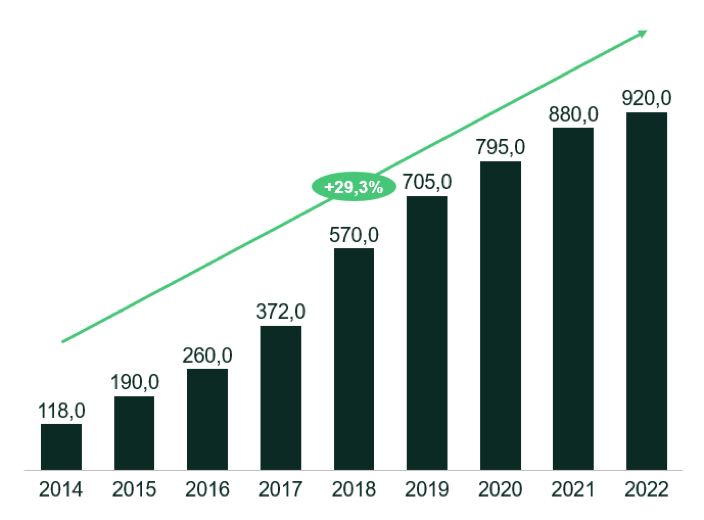
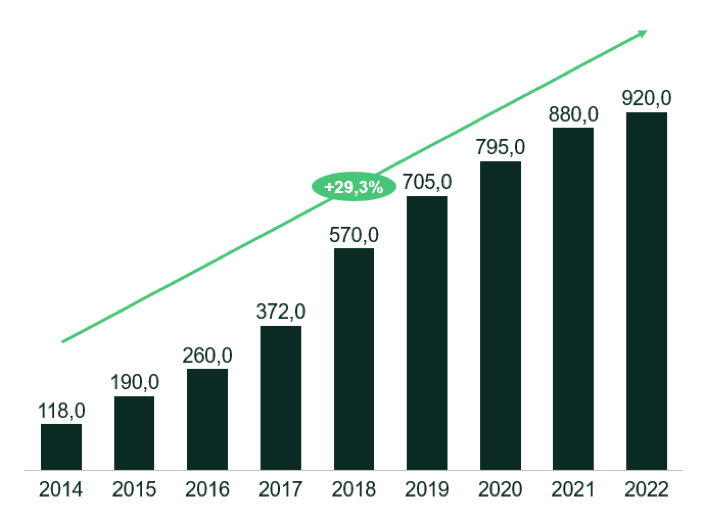
The corporate fleet market is at the forefront of technological evolution, being an area where the change in the concept of mobility is being tested. Consider that, to date, out of a total of 983,000 vehicles, there are already over 920,000 long-term rental vehicles on which telematics devices have been installed, representing an average growth of +29.3% over the last 8 years.

Figure 2 Telematics devices installed on long-term rental fleets (value in thousands and CAGR), 2014 – 2022. Source: elaboration The European House – Ambrosetti on Aniasa data, 2022

The growing spread of digital telematics systems makes it possible to complement the traditional mobility offer with new value-added services capable of ensuring:

  • optimisation of operating costs;
  • advantages in terms of increased security;
  • mitigation of fraud risk;
  • better organisation;
  • lower environmental impact.

Another area analysed during the round tables is Corporate Car Sharing, a market with more than 4,000 units in 2021 (+8.9% vs. 2019). Corporate Car Sharing is composed of passenger cars 94% of the time and commercial vehicles the remaining part (6%). 61% of Corporate Car Sharing fleets are made-up of alternative fuel vehicles, i.e. Hybrid Electric Vehicle, Plug-in Hybrid Electric Vehicle, Full Electric, a figure that highlights the driving role of Corporate Car Sharing in the market penetration of new sustainable engines.

Sharing, finally, shows different trends: car sharing vehicles have decreased by -22.4% over the last three years, while micro-mobility vehicles have increased by +8.9%. In micro-mobility sharing, the number of scooters increased by 360% over the last year (2020 vs. 2019). In contrast, the number of bicycles available fell from about 65,000 to just under 41,000, a reduction of 37%. In the car-sharing sector, there is also a change in terms of usage pattern: while the number of rentals decreased by 9%, the number of customers increased by 13% and the number of kilometres travelled increased by 9% (2021 vs. 2020), which denotes a gradual expansion of the business model outside urban centres and the ability to meet the needs of a growing user base.

The data revealed a varied landscape for fleet managers, a landscape for which several key messages were identified that highlight the need for business efficiency and innovation:

  • The adoption and deployment of telematics solutions in fleets is an important step towards improving management operations and making them more efficient;
  • Increasingly, the boundary between different mobility offers will disappear and they will have to be integrated to provide new services to users. Fleet managers will have to use data to dynamically identify customer needs and make operating models more flexible;
  • Performance with regard to consumption, emissions and overall fleet management must be closely monitored in order to set concrete, measurable and communicable sustainability strategies;
  • Data will drive the energy transition to new drives, and the integration of data with blockchain technology will enable a breakthrough in demonstration and liability management processes.

Transition to Green

The penultimate working table was dedicated to the topic of Transition to green, a particularly challenging area also considering the resources made available by the PNRR. The working table aimed to engage mobility stakeholders and utilities to identify opportunities for value creation in the transition to new paradigms of sustainable mobility in line with OCTO’s Vision Zero (zero accidents, zero congestion, zero pollution).

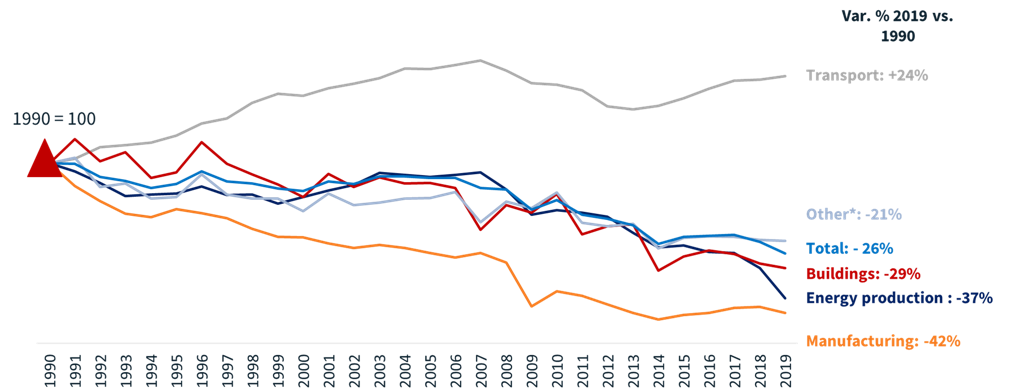
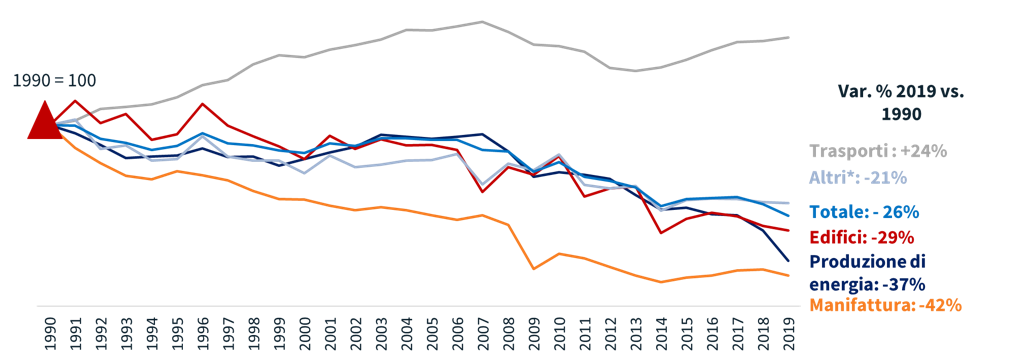
The green trend is particularly important for the transport sector. At European level, the sector is the only one to show an increasing trend in emissions since 1990 (+24%) – in contrast to the average emissions, which have fallen by 26% over the same period.

Figure 3 Evolution of GHG emissions by source sector in Europe (%, 1990=100), 1990-2019. Source: The European House – Ambrosetti elaboration on Eurostat data, 2022

It is important for mobility stakeholders to prepare for the green transition. While on the one hand, 80% of citizens are ready to choose a green vehicle (in particular in 46% of cases the choice is driven by the intention to be sustainable), on the other hand, in 92% of cases, consumers still consider the barrier due to the so-called range anxiety concerning the possibility of recharging and vehicle autonomy to be high.

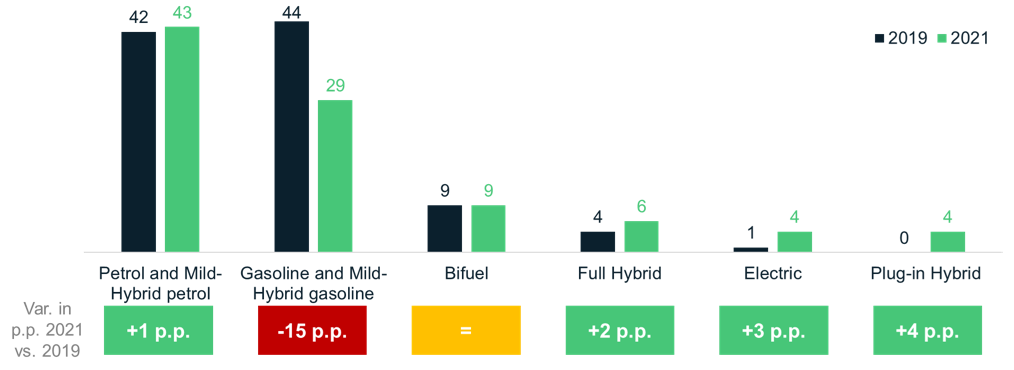
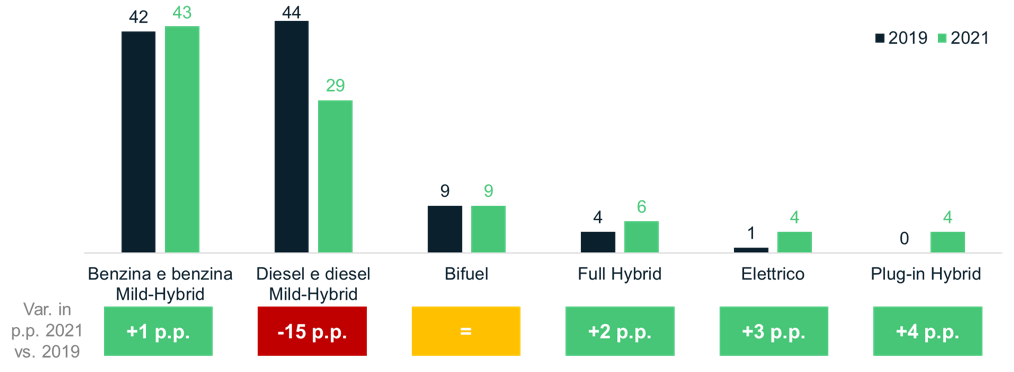
A clear trend is related to the acceleration of the spread of electric vehicles – necessarily to be read in connection with the presence of specific incentives. In fact, compared to November 2019, registrations of electric vehicles in Italy have increased 2.3 times.

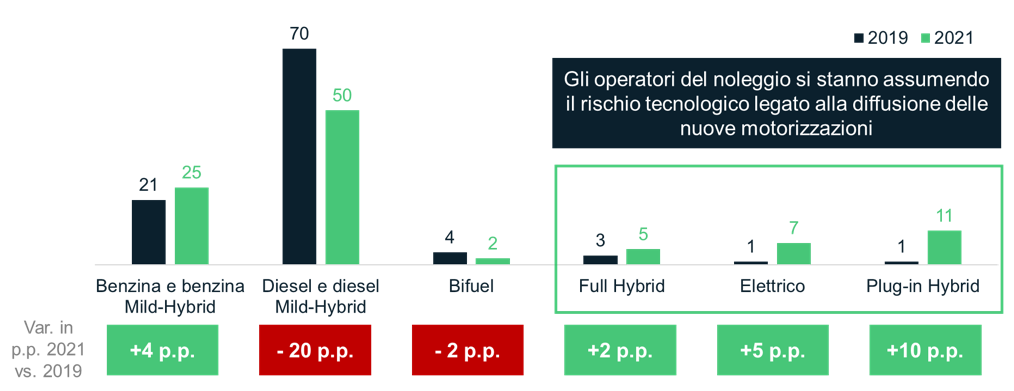
Figure 4 New registrations in the Italian market by motorisation (percentage value), 2019 and 2021. Source: elaboration The European House – Ambrosetti on Dataforce data, 2022 

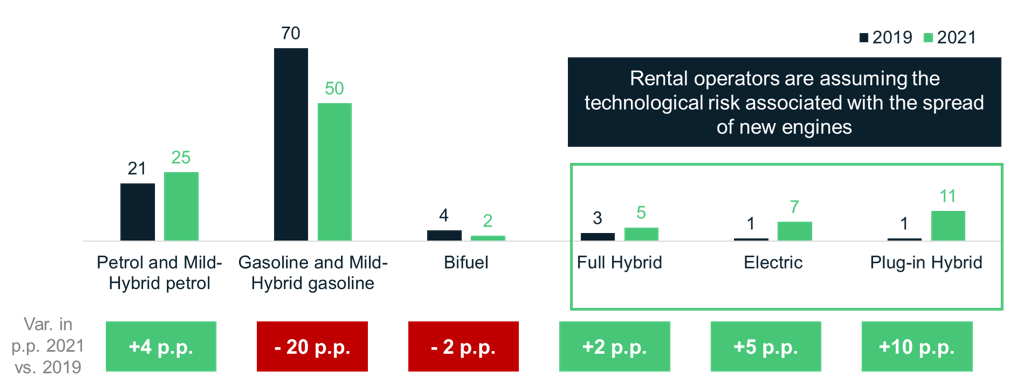
Comparing the growth trends in registrations of green engines on the market and in the long-term rental sector, the latter is favouring a greater spread of hybrid and electric engines, respectively electric (+5 p.p. vs. +3 p.p. in 2019-2021) and plug-in hybrid (+10 p.p. vs. +4 p.p. in the last two years). It is therefore clear that rental operators are assuming the technological risk associated with the spread of new powertrains.

This transition will not only impact fleet managers’ ability to assess the residual value of the vehicle, but also, and above all, the definition of new operating models that will necessarily have to be based on different service chains. To get a measure of these impacts, one need only consider that 54% of the industrial cost of an electric vehicle is linked to components not found in a conventional vehicle.

Figure 5 Vehicles in long-term rental by fuel in Italy (percentage value), 2019 and 2021. Source: elaboration The European House – Ambrosetti on Dataforce data, 2022

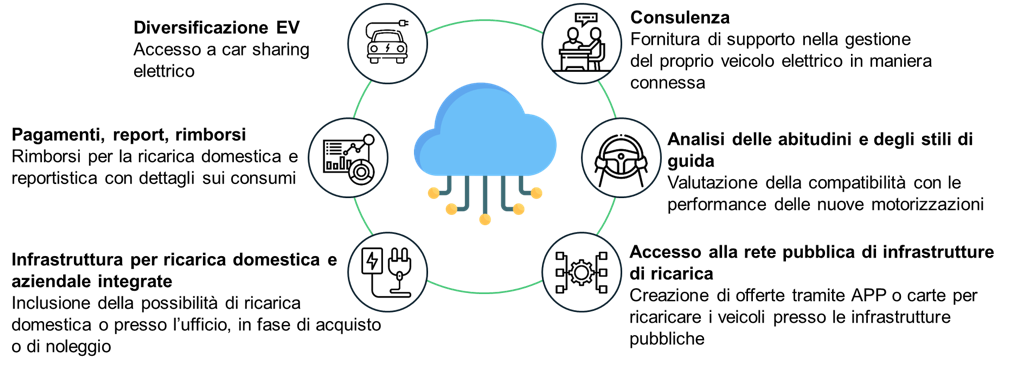
Finally, the increased use of alternative fuel vehicles in long-term rental will have to be fostered by an offer model increasingly based on complete service packages able to cover all customer needs – these packages are made possible by the creation of stakeholder ecosystems and the use of data and digital technologies to better manage and understand customer needs.

Figure 6 The evolutionary elements of the Long-Term Rental service model. Source: elaboration The European House – Ambrosetti on data from ALD Automotive, 2022

A number of key messages emerged from the ‘Transition to green’ working group that can guide the development of the mobility sector in the near future:

  • The data make it possible to monitor the state of urban mobility and optimise the planning of interventions to reduce environmental impacts;
  • The data make it possible to analyse the needs of each actor in order to choose the best solution based on the specific context;
  • The penetration of new motorisation must be accompanied by a model change that combines service provision with vehicle equipment;
  • Rental operators are taking on the technological risk. The ability to acquire and manage data from the vehicle is crucial to reduce risks and better manage the transition to new technologies and engines;
  • New models such as Corporate Car Sharing make it possible to make shared services available to a wider audience (customer base) and accompany the transition to new motorisation.

Author:

The European House – Ambrosetti

I messaggi chiave emersi dai tavoli di lavoro dedicati alle Flotte e Transition to green

In questo quarto articolo sono descritti i messaggi chiave emersi nel corso dei tavoli organizzati da The European House – Ambrosetti e OCTO Telematics con le aziende e le istituzioni leader in Italia nella realizzazione di progetti di mobilità connessa. In particolare, i tavoli di lavoro analizzati nel presente articolo vertevano sulla terza area strategica individuata, vale a dire quella della mobilità connessa, della gestione delle flotte e dalla “Transition to green”.

OCTO e The European House – Ambrosetti hanno organizzato, per il secondo anno consecutivo, un’intensa attività di stakeholder engagement – coinvolgendo oltre 40 attori – con l’obiettivo di comprendere le reali esigenze degli attori della mobilità e promuovere uno sviluppo sinergico di un nuovo paradigma di mobilità connessa, sostenibile e smart.

Figura 1 Le quattro aree strategiche di sviluppo e i sette tavoli di lavoro

Monitoraggio delle Flotte

Il tavolo di lavoro sul monitoraggio dell’efficienza delle flotte è stato progettato con l’obiettivo di identificare opportunità di sviluppo di nuove soluzioni che possano abilitare non solo benefici in termini di efficienza ed economicità per i gestori delle flotte, ma anche permettere una definizione di modelli operativi maggiormente vicini alle esigenze dei clienti e degli obiettivi di sostenibilità.

Nello specifico, le analisi hanno considerato diverse tipologie di flotte: da quelle di noleggio a breve termine, al noleggio a lungo termine, dal corporate car sharing fino allo sharing di mezzi di micromobilità.

Dalle analisi sono emerse alcune tendenze chiave. Ad esempio, complessivamente negli ultimi tre anni, probabilmente anche a causa dello shock pandemico, le flotte di noleggio a breve termine hanno registrato una riduzione del 28% del numero dei mezzi. Una riduzione che non è stata uniforme rispetto alle diverse tipologie di parco veicoli: infatti, a fronte di una più marcata riduzione delle autovetture, pari al -17%, si è registrato un aumento dei furgoni disponibili per il noleggio (+8%).

Per quanto riguarda il noleggio a lungo termine si è registrato un aumento della flotta disponibile, +8% nel periodo 2019-2020. Inoltre, il fatturato delle aziende del noleggio a lungo termine è aumentato, nell’ultimo anno, del +12%, passando da 7,9 miliardi di Euro a circa 8,8 miliardi di Euro. Il mercato delle flotte aziendali è in prima linea sul fronte dell’evoluzione tecnologica, essendo un ambito dove si testa il cambiamento del concetto di mobilità. Si pensi che, ad oggi, su un totale di 983 mila veicoli, sono già oltre 920 mila i veicoli di noleggio a lungo termine su cui sono stati installati dispositivi telematici, pari a una crescita media del +29,3% negli ultimi 8 anni.

Figura 2 Dispositivi telematici installati sulle flotte di noleggio a lungo termine (valore in migliaia e CAGR), 2014 – 2022. Fonte: elaborazione The European House – Ambrosetti su dati Aniasa, 2022

La crescente diffusione dei sistemi telematici digitali permette di affiancare all’offerta tradizionale di mobilità nuovi servizi a valore aggiunto in grado di assicurare:

  • ottimizzazione dei costi di gestione;
  • vantaggi in termini di maggiore sicurezza;
  • mitigazione del rischio frode;
  • migliore organizzazione;
  • minor impatto ambientale.

Un altro ambito analizzato durante i tavoli di lavoro è quello relativo al Corporate Car Sharing, mercato che, nel 2021 ha superato le 4 mila unità (+8,9% vs. 2019). Il Corporate Car Sharing è composto per il 94% dei casi da autovetture e per la restante parte (6%) da veicoli commerciali. Il 61% delle flotte di Corporate Car Sharing è composto da veicoli a combustibili alternativi, ovvero Hybrid Electric Vehicle, Plug-in Hybrid Electric Vehicle, Full Electric, un dato che evidenzia il ruolo propulsivo del Corporate Car Sharing nella diffusione sul mercato di nuove motorizzazioni sostenibili.

Lo sharing, infine, registra tendenze differenti: i veicoli a disposizione del car sharing sono diminuiti del -22,4% negli ultimi tre anni, mentre i mezzi di micromobilità sono aumentati del +8,9%. Nello sharing dei mezzi di micromobilità, il numero di monopattini è aumentato del 360% nel corso dell’ultimo anno (2020 vs. 2019). Al contrario, le biciclette a disposizione sono passate da circa 65 mila a poco meno di 41 mila, pari a una riduzione del 37%. Nel settore del car-sharing si assiste, inoltre, ad un cambiamento in termini di modello di utilizzo: a fronte di un calo del 9% nel numero di noleggi effettuati, il numero di clienti è aumentato del 13% e i chilometri percorsi sono cresciuti del 9% (2021 vs. 2020), fatto che denota un graduale allargamento del modello di business anche al di fuori dei centri urbani e la capacità di soddisfare le necessità di una base crescente di utenti.

I dati evidenziati mettono in luce un panorama variegato per i gestori delle flotte, panorama per il quale sono stati identificati alcuni messaggi chiave che evidenziano le necessità di efficienza e innovazione del business:

  • L’adozione e la diffusione delle soluzioni di telematica nelle flotte rappresenta uno step importante per migliorare le operazioni di gestione e renderle più efficienti;
  • Sempre più il confine tra le diverse offerte di mobilità andrà a scomparire e queste dovranno essere integrate per fornire nuovi servizi agli utenti. I gestori delle flotte dovranno utilizzare i dati per individuare in maniera dinamica le esigenze dei clienti e rendere più flessibili i modelli operativi;
  • Le performance relative a consumi, emissioni e gestione complessiva della flotta devono essere attentamente monitorate al fine di impostare strategie di sostenibilità concrete, misurabili e comunicabili;
  • I dati guideranno la transizione energetica verso nuove motorizzazioni e l’integrazione dei dati con la tecnologia blockchain consentirà un importante passo avanti nei processi dimostrativi e di gestione delle responsabilità.

Transition to Green

Il penultimo tavolo di lavoro è stato dedicato al tema della Transition to green, un ambito particolarmente sfidante anche alla luce delle risorse messe a disposizione dal PNRR. Il tavolo di lavoro si è posto l’obiettivo di ingaggiare gli stakeholder della mobilità e le utility per identificare opportunità di creazione di valore nella transizione verso nuovi paradigmi di mobilità sostenibile in linea con la Vision Zero di OCTO (zero incidenti, zero congestione, gesto inquinamento).

L’evoluzione green è particolarmente importante per il settore dei trasporti. A livello europeo il settore è l’unico a mostrare un trend crescente di emissioni dal 1990 (+24%) – in controtendenza rispetto alle emissioni medie che sono diminuite del 26% nello stesso periodo.

Figura 3 Evoluzione delle emissioni di GHG per settore di origine in Europa (%, 1990=100), 1990-2019. Fonte: elaborazione The European House – Ambrosetti su dati Eurostat, 2022

È importante per gli stakeholder della mobilità prepararsi per far fronte alla transizione ecologica. Se da un lato, infatti, l’80% dei cittadini è pronto a scegliere un mezzo green (in particolare nel 46% dei casi la scelta è guidata dall’intenzione di voler essere sostenibili), dall’altro, nel 92% dei casi, i consumatori ritengono ancora alta la barriera dovuta alla cosiddetta range anxiety relativa alla possibilità di ricarica e all’autonomia dei mezzi.

Una tendenza evidente è legato all’accelerazione della diffusione dei veicoli elettrici – da leggersi necessariamente in relazione alla presenza di incentivi specifici. Infatti, rispetto a novembre 2019, le immatricolazioni di veicoli elettrici in Italia sono aumentate di 2,3 volte.

Figura 4 Nuove immatricolazioni nel mercato italiano per motorizzazione (valore percentuale), 2019 e 2021. Fonte: elaborazione The European House – Ambrosetti su dati Dataforce, 2022 

Confrontando le tendenze di crescita delle immatricolazioni delle motorizzazioni green sul mercato e nel settore del noleggio a lungo termine, si registra come quest’ultimo stia favorendo una maggiore diffusione delle motorizzazione ibride ed elettriche, rispettivamente elettrico (+5 p.p. vs. +3 p.p. nel periodo 2019-2021) e Plug-in Hybrid (+10 p.p. vs. +4 p.p. negli ultimi due anni). È quindi chiaro come gli operatori del noleggio si stiano assumendo il rischio tecnologico legato alla diffusione delle nuove motorizzazioni.

Questa transizione non avrà impatto solamente sulla capacità dei gestori delle flotte di valutare il valore residuo del veicolo, ma anche, e soprattutto, sulla definizione di nuovi modelli operativi che necessariamente dovranno basarsi su diverse filiere di servizio. Per avere una misura di questi impatti basti pensare che il 54% del costo industriale di un veicolo elettrico è legato a componenti non presenti all’interno di un veicolo tradizionale.

Figura 5 Veicoli nel noleggio a lungo termine per alimentazione in Italia (valore percentuale), 2019 e 2021. Fonte: elaborazione The European House – Ambrosetti su dati Dataforce, 2022

Infine, la maggiore diffusione dei veicoli a combustibili alternativi nel noleggio a lungo termine dovrà essere favorita da un modello di offerta sempre più basato su pacchetti di servizi completi che tendono a coprire tutte le necessità dei clienti – questi pacchetti sono resi possibili dalla creazione di ecosistemi di stakeholder e dall’utilizzo di dati e tecnologie digitali per meglio gestire e comprendere le necessità dei clienti.

AFigura 6 Gli elementi di evoluzione del modello di servizio di Noleggio a Lungo Termine. Fonte: elaborazione The European House – Ambrosetti su dati ALD Automotive, 2022

Dal tavolo di lavoro “Transition to green” sono emersi una serie di messaggi chiave che potranno indirizzare lo sviluppo del settore della mobilità nel prossimo futuro:

  • I dati permettono di monitorare lo stato della mobilità urbana e ottimizzare la pianificazione degli interventi per ridurre gli impatti ambientali;
  • I dati permettono di analizzare le necessità di ciascun attore al fine di scegliere la soluzione migliore sulla base dello specifico contesto;
  • La penetrazione di nuove motorizzazioni deve essere accompagnata da un cambio di modello che affianchi la fornitura di servizi alla dotazione del veicolo;
  • Gli operatori del noleggio si stanno facendo carico del rischio tecnologico. La capacità di acquisire e gestire dati provenienti dal veicolo è fondamentale per ridurre i rischi e gestire al meglio il passaggio a nuove tecnologie e motorizzazioni;
  • Nuovi modelli come il Corporate Car Sharing permettono di mettere a disposizione servizi condivisi a una platea (customer base) più ampia e accompagnare la transizione verso nuove motorizzazioni.

Autore:

The European House – Ambrosetti
Become
a Contributor!
We’re always looking for interesting ideas and content to share within our community.
Get in touch and send your proposal to: press@octotelematics.com